




Undergraduate BA(hons) or BSc (Hons) Creative Industries Futures (Music) Composition
Apply now
Course overview
The Music Composition degree is designed for creators who want to explore musical ideas, develop a unique compositional voice and build a professional portfolio for today’s creative industries.
Whether you’re writing for artists, ensembles, film, TV, games or digital media, you’ll learn advanced compositional techniques, creative workflow and industry context — supported by expert guidance from active composers, arrangers and producers.
Refine your craft, collaborate widely and discover where your music can take you.
Modules
Modules
ACM’s core validated learning provision. These are the building blocks of your degree, through which you will be assessed, accrue credits, and progress towards your final qualification. ACM’s module design blends the rigour of a high-quality academic framework and up-to-date industry knowledge. Students also develop critical professional competencies as they progress through their programme.
Advanced Creative Practice Skills Labs
Alongside your postgraduate studies, you’ll have access to advanced Skills Labs each term, giving you the opportunity to further develop your specialist technical expertise. These practical sessions allow you to explore emerging creative practice techniques and encourage you to experiment with new technologies, ensuring your skills remain aligned with the latest developments in the music industry.
Modules
MIF – 407 Music Industry Futures
Studying alongside students from every music pathway, you’ll explore the people, organisations and processes that shape today’s music business, from recording and publishing to live events and emerging technologies. You’ll gain an understanding of how songwriters collaborate with industry professionals, whilst developing a broad awareness of the opportunities, challenges and career paths that define the modern music industry.
MIF-411 Specialist Creative Practice 1
Build the practical skills that form the foundation of your future career as a composer. This module is taught through hands-on Skills Labs where you will explore the core aspects of composition and what factors and attributes contribute towards effective composition, as well as the fundamentals of contemporary popular music theory, ear training and critical listening.
MIF-412 Specialist Creative Practice 2
As you build on the foundations established in Specialist Creative Practice 1, you’ll refine your technical approach, strengthen your creative decision-making and develop your composition skills through the use of Digital Audio Workspaces as well as building upon music theory to develop your notation and score preparation. Through your practical Skills Labs, you’ll develop more advanced techniques that support your ongoing growth as a composer.
MIF-413 Music Culture & Communities
Music shapes cultures, communities and influences the world around us. In this module, you’ll study alongside other pathways across music and explore how the music industry connects with society, identity and creative communities. Through discussion, research and shared perspectives, you’ll gain a broader understanding of the cultural impact of music whilst developing valuable research skills that will inform your own practice as a composer and help you create work that connects with music industry professionals and audiences.
CIF – 405 Preparing for Collaborative Projects
During this module, you’ll develop the skills needed to prepare you for working with peers across the music degree to apply your composition skills to an interdisciplinary creative project.
CIF – 406 – Engaging in Collaborative Projects
Following on from CIF-405, you’ll work collaboratively on a shared project brief with students from other disciplines. You’ll build upon your skills to support larger projects with the creative industry and contribute your composition skills to fulfilling a creative brief.
Skills Units
SKU-COM-01 Composition Techniques I
This unit prepares students with the fundamental techniques of composition needed to begin working as a composer. In particular, aspects of harmonic, rhythmic and melodic structures, timbral considerations, and voice leading are explored, giving the students a range of creative approaches to develop with.
SKU-COM-02 Theory, Aural Skills & Critical Listening
This unit teaches you the fundamentals of contemporary popular music theory, ear training and critical listening, enabling you to analyse, understand, and reapply concepts across a spectrum of contemporary popular music examples.
SKU-PRO-01 DAW Composition & Arrangement
This Skills Unit reinforces the underlying skills required to produce music within a Digital Audio Workstation. Introducing students to other DAWs and focusing on how arrangement skills can assist the role of the producer.
SKU-COM-04 Notation and Score Preparation
Producing charts and scores is essential for songwriters and composers working with musicians. Writing down music ensures precise performance, efficient rehearsals, and easy adaptability to changes, which is crucial in professional settings. Charts help musicians start from any point, remember details, adjust structures, and seamlessly incorporate substitutes. In these lectures, students will learn best practices for creating clear, accurate musical scores.
Modules
CIF – 501 – Specialist Collaborative Work
This module allows you to apply your composition skills within ambitious, cross-disciplinary creative projects. Working alongside students from across the music degree, you’ll respond to industry-inspired briefs, taking on the role of a songwriter to shape songs and compositions to collaborative outcomes. Along the way, you’ll be strengthening your project management, communication and creative problem-solving skills.
CIF – 502 – Professional Collaborative Work
You’ll take your collaborative experience into a professional context by delivering a major project that reflects the realities of the music industry. Working with students across the course, you’ll apply your songwriting expertise to help realise ambitious creative work, managing technical and creative challenges and developing the confidence, adaptability and professional mindset needed to succeed as a composer in today’s collaborative creative industries.
CIF – 503 – Specialist Route Skills
Refine the skills needed to compose for media. Your skills labs will take you through more advanced composition techniques and an introduction to film music composition, techniques and business concepts used within film composition, and you’ll develop your orchestration skills to use within your compositional and arrangement work. Combining advanced technical practice with critical reflection, you’ll build the confidence, creativity and professional understanding required to deliver industry-ready compositions.
CIF – 504 – Professional Route Skills
Building on your Specialist Route Skills, you’ll expand your songwriting expertise by applying your skills to a range of professional projects. Through advanced skills labs, you’ll further develop your skills in compositional arrangement. and advanced harmony, melody and rhythm. Through building a portfolio of professional work, you’ll demonstrate the technical ability, adaptability and critical thinking needed to succeed across the modern music industry.
Skills Units
SKU-COM-03 Composition Techniques II
The major aim of this module is to develop students’ skills as composers through the study and practice of several relevant techniques. It is not an exhaustive list of compositional devices, and at all times, students are encouraged to explore the topics further. As part of this, students may wish to continue developing the material started each week.
SKU-COM-08 Introduction to Film Music
This unit will provide a broad overview of the field of film music composition. Aspects of the business side as well as creative considerations will be discussed.
SKU-COM-05 Orchestration
This unit will provide a broad overview of the basics of the instruments in each orchestral family and how to score them, using a wide variety of compositional and arrangement tasks to explore a multitude of genres and styles.
SKU-COM-18 Arranging II
This unit will build upon knowledge and skills gained in Arranging I. More advanced arranging techniques for rhythm section, background vocals and horns will be discussed in depth.
SKU-COM-09 Advanced Harmony, Melody & Rhythm
This unit is designed to help students to stretch and challenge their knowledge and use of advanced music theory and harmony.
Modules
CIF – 601 – Critical Review Preparation
Prepare for your dissertation by developing the research, analysis and critical thinking skills needed to investigate contemporary issues in music composition. You’ll explore current debates, technologies and professional practice whilst learning how to evaluate sources, develop research questions and construct evidence-based arguments. This module will provide the foundation for independent research, helping you identify a topic that reflects your interests and future career ambitions.
CIF – 601 – Critical Review
Undertake an independent research project exploring an area of composition that matters to you. Whether investigating emerging songwriting trends and technologies, creative practice, writing workflows, or the wider social and cultural impact of music, you’ll critically evaluate contemporary issues using academic research and professional evidence. You’ll produce a substantial piece of work that demonstrates your ability to think critically, conduct independent research and contribute to conversations shaping the future of songwriting.
CIF – 603 – Leadership and CPD
Prepare for life beyond your studies by developing the advanced technical skills and professional mindset expected of composers. Through specialist Skills Labs, you’ll explore compositional styles and analysis as well as how to compose for large ensembles. As you refine your technical expertise, you’ll reflect on your strengths and develop your leadership skills.
CIF – 602 – Leading a Professional Collaborative Project
Bring together everything you’ve learned throughout your degree in your final major collaborative project that showcases your skills as a songwriter. Taking a leading role within an interdisciplinary team, you’ll manage the creative and technical demands of delivering a professional standard body of work. Supported by specialised Skills Labs in blending electronic and live instrumentation and translating a recording into a live arrangement.
CIF – 604 – Professional Portfolio
You’ll prepare to launch your career by creating a professional portfolio that showcases your skills, creativity and technical expertise as a composer. In this module, you’ll curate your best work to develop a strong digital presence that reflects your creative identity.
Skills Units
SKU-COM-13 Compositional Styles and Analysis
This module examines several influential compositional styles from the late 19th century to the present day, serving as a model for future musical and compositional analysis. Students will engage with representative works to identify defining techniques of various musical styles, examining cultural and historical contexts. Throughout the module, guided composition exercises will encourage composers to synthesise their newfound knowledge of these techniques into a unique and individual creative voice.
SKU-COM-21 Composing for Large Ensembles
This unit will cover composition considerations when working with a large ensemble such as a symphony orchestra or choir.
SKU-COM-19 Blending Electronic and Live Instrumentation
This unit explores the dynamic fusion of electronic and live instrumentation, guiding students through the creative process of blending acoustic and digital sounds. Learn to seamlessly integrate synthesisers, drum machines, and samples with instruments like guitar, vocals, and drums. Students develop arranging skills by exploring diverse textures and sonic landscapes, from ambient electronica to high-energy dance music. Delve into MIDI, synchronisation, and effects processing to achieve a cohesive and captivating sonic experience. Through hands-on projects and collaborative exercises, students gain the confidence to produce innovative and genre-bending music that pushes creative boundaries. Whether you’re a songwriter, producer, or performer, this course will empower you to bridge the gap between the electronic and acoustic worlds.
SKU-COM-16 Translating a Recording Into a Live Arrangement
This unit explores the process of turning recordings into live performances. The unit will focus on bringing students’ own compositions to life by transcribing, arranging and using technology to create effective live performances.
CIF – 701 – Professional Practice Frameworks
Develop the professional expertise expected of senior practitioners in the music industry. You’ll critically evaluate your own creative practice, reflect on your professional experiences and benchmark your skills against recognised industry standards. This module helps you strengthen your credentials and prepare for leadership roles within the evolving music industry.
CIF – 702 – Applied research
Undertake an in-depth research project centred on an area of composition that aligns with your professional ambitions. Whether developing an advanced creative portfolio, investigating emerging songwriting technologies or exploring innovative musician practice, you’ll combine rigorous academic research with specialist practice to produce a substantial body of work that reflects your expertise and individual interests.
CIF – 703 – Ideas into action
Transform ambitious ideas into professionally realised projects. From initial concept through to delivery, you’ll refine your practice whilst building the organisational and entrepreneurial skills required to deliver projects in professional environments.
CIF – 704 – Making connections
Success in the music industry is built on relationships as much as talent. This module helps you expand your professional network by connecting with industry practitioners, creative organisations, community partners and potential collaborators. You’ll develop the confidence to build meaningful professional relationships, identify new opportunities and position yourself within the wider music industry.
Advanced Creative Practice Skills Labs
Alongside your postgraduate studies, you’ll have access to advanced Skills Labs each term, giving you the opportunity to further develop your specialist technical expertise. These practical sessions allow you to explore emerging creative practice techniques and encourage you to experiment with new technologies, ensuring your skills remain aligned with the latest developments in the music industry.
Clearing 2026 is open at ACM
If your results didn’t go to plan, you’ve exceeded expectations, changed your mind or you’re applying for the first time, there’s still time to secure your place for September. Learn from industry professionals, gain hands-on experience in professional facilities and build the skills, portfolio and connections to turn your passion into a career with ACM.
Our Admissions Team is here to guide you through every step of the process and help you find the right course for you.

Fees & Entry requirements
- Minimum age 17+ for Foundation Learners and 18+ for our Accelerated Degree Courses.
- You will be expected to hold A Levels or Equivalent Level 3 Qualification(s) worth 104 UCAS Points or more **
- You will be expected to hold a GCSE in English Language / Literature at C grade/ 4 (or higher)
- Suitability for the programme will also be assessed through an audition. View audition guides
- Fees & financing information can be found on our Fees page
- Term dates can be found on the Term Dates page
If you do not have A-Levels and require moderation, please speak to our admissions team to explore the options available to you.
This course is presented in conjunction with our partners Middlesex university and is subject to the regulations and policies detailed here.
Progression
Contact our Admissions team to discuss the possibility of switching to an Integrated Masters program or explore a range of our Postgraduate programs here.
Tutors
Matthew Peters
Composition Route Lead

Michael Dunn
Senior Lecturer in Performance

Mike Nichols
Senior Lecturer in Performance
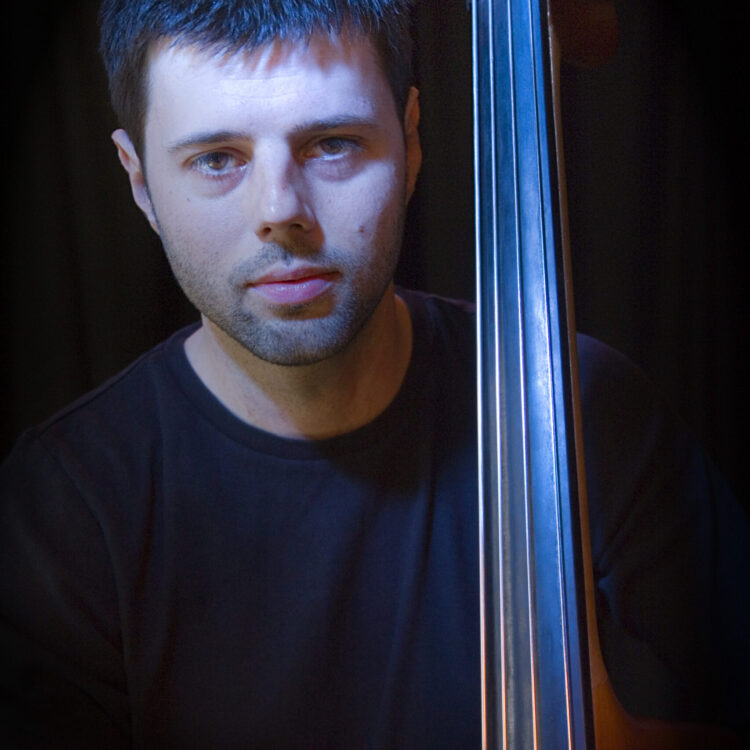
Dr Tom Atherton
Senior Lecturer in Composition and Performance

Giorgio Serci
Senior Lecturer in Composition and Performance