






Undergraduate BA/BSc (Hons) Game
Apply now
Course overview
Create games that people want to play. ACM’s Game Development degree brings together creative ambition, technical skill and collaborative practice to develop the next generation of games professionals. Build your expertise, discover your strengths and turn original ideas into playable experiences within a community connected to the wider creative industries.
Explore how design, art, code and audio come together to create compelling games. From developing concepts and prototypes to testing and refining your work, you’ll learn to make purposeful decisions about how a game looks, feels and plays. Develop specialist skills while understanding the production process and how your contribution fits within a development team.
Collaboration is at the heart of the course. Work across game development disciplines, taking projects from initial ideas to completed games and building a portfolio that demonstrates both your individual abilities and your experience of team production. ACM’s community of musicians, composers and audio practitioners also creates opportunities to explore the role of original music and sound in interactive experiences.
Connect your learning to professional practice through ACM’s Industry Link team, industry contacts and specialist workshops. These connections help you understand the expectations of games professionals, broaden your perspective and develop the confidence to discuss and present your work.
Alongside your creative and technical development, strengthen your ability to pitch ideas, respond to feedback, solve problems and manage projects. Whether your ambition is to join a development studio or pursue independent game creation, you’ll graduate with a portfolio of playable work, experience of creative collaboration and a clearer direction for your career in games.

Audio
Music and sound effects create the atmosphere necessary for games to become immersive experiences and are often used as a means of feedback on a player’s actions. If you recognise the importance of audio in games and want to make sound environments and scores to electrify players, then this is the degree for you. You’ll graduate with a portfolio of audio for several completed games on which you will have worked closely with a multi-disciplined development team, and have first-hand experience of the development pipeline. Previous qualifications in music provide a good grounding for this course.

Art
Turn your love for games into a career and become part of a thriving global gaming industry with a Games Degree specialising in Art.
Ideally suited to those who have a passion for both art and games. Visual design lies at the heart of most games from concept to completion; this specialism will teach you the core abilities required to become a skilled game artist, from concept art to character and environment modelling, both 2D and 3D, using industry-standard packages, processes and pipelines. You’ll graduate with a professional portfolio, developed in concert with a multi-disciplinary team of other developers, so you can show your work in context.

Design
Turn your love for games into a career and become part of a thriving global gaming industry.
If working out the rules, systems, puzzles and challenges that shape a player’s experience in a game is what you get excited about, then Game Development: Design is for you. You’ll graduate having had extensive experience as a game designer from paper concept to the finished article, with a portfolio of completed games on which you have worked closely with all the other development team disciplines. No specific subject area is required for this specialism in terms of previous qualifications, but a good, passionate understanding of games and the ability to understand and interpret software are advantageous.

Programming
Turn your love for games into a career and become part of a thriving global gaming industry.
Digital games are only possible because of the programming skills that turn imagination into reality. This specialism allows you to learn programming and apply that knowledge to the specific context of making games in a team. If games are your passion and you want to become a games programmer, rather than take a more generic computing degree, then this is the specialism for you. You’ll learn to program in C# and work with animators, artists, designers, sonic artists and writers to make completed games. Our programming course is designed to be highly accessible, and anyone with the desire to put in the work to learn to code can flourish in it. Certainly, a background in doing some IT, Computing or Maths will prove helpful if you choose this specialism.

Business
Become part of one of the fastest-growing global industries with a games business degree. This specialism allows you to learn about the global game industry from both an indie and AAA perspective.
You’ll learn how to pitch, market, and project manage games in a collaborative environment with game designers, artists, audio designers and programmers. Our creative business course is designed to be accessible and adaptable to industry needs. Any student with enthusiasm for games and collaborative working can develop their skills and flourish on this course. Enthusiasm for games and previous experience working in teams provide a good basis for students wanting to study this course.


Modules
Please select your specialism from the left to see the modules.
Modules
ACM’s core validated learning provision. These are the building blocks of your degree, through which you will be assessed, accrue credits, and progress towards your final qualification. ACM’s module design blends the rigour of a high-quality academic framework and up-to-date industry knowledge. Students also develop critical professional competencies as they progress through their programme.
Skills Units
Skills units are ACM’s unique delivery model for up-to-date technical and industry knowledge. These are where you will learn everything you need to excel in your chosen discipline, and inform how you approach your assessments.
Modules & Skills Units
DAIF-407 Digital Arts Futures
Studying alongside students from across the Digital Arts disciplines, you’ll explore how creative technologies shape industries, disrupt markets and create new opportunities. From game engines in film and healthcare to AI, virtual production and emerging technologies, you’ll investigate why some innovations succeed while others fail, analyse the trends driving change, and develop the skills to spot future opportunities. You’ll finish the module by presenting an evidence-based industry pitch built around your own research and ideas.
DAIF-411 Specialist Creative Practice 1
Build on the practical skills developed in Digital Arts Futures as you explore more advanced game design principles, production workflows and player experience. Through hands-on Skills Labs, you’ll refine your design process, further develop your Unity prototype and use research, playtesting and iteration to create more engaging, polished and technically accomplished gameplay experiences.
DAIF-412 Specialist Creative Practice 2
As you build on the foundations established in Specialist Creative Practice 1, you’ll refine your technical approach, strengthen your creative decision-making and develop your game design, prototyping and level design skills using industry-standard tools. You will also explore more advanced design methodologies, iterative development and the importance of playtesting throughout the game development process. Through your practical Skills Labs, you’ll develop more advanced techniques that support your ongoing growth as a game designer.
DAIF-413 Digital Arts Culture & Communities
Games shape cultures, communities and the world around us. In this module, you’ll study alongside other Games disciplines and explore how games connect with society, identity and creative communities. Through discussion, research and shared perspectives, you’ll gain a broader understanding of the cultural impact of games while developing valuable research skills that will inform your own practice as a game designer and help you create meaningful experiences that resonate with players and the wider games industry.
CIF-405 Preparing for Collaborative Work
During this module, you’ll develop the skills needed to work collaboratively with peers across all Games disciplines, applying your specialist knowledge to an interdisciplinary creative project while gaining experience of professional teamwork and creative collaboration.
CIF-406 Engaging in Collaborative Projects
Following on from CIF-405, you’ll work collaboratively on a shared project brief with students from other disciplines. You’ll build upon your skills to support larger projects with the digital arts industy and contribute your games design skills to fulfilling a creative brief.
Modules & Skills Units
CIF-501 Specialist Collaborative Work
This module allows you to apply your game design skills within ambitious, cross-disciplinary creative projects. Working alongside students from across the games degree, you’ll respond to industry-inspired briefs, taking on the role of a game designer while collaborating with artists, programmers and audio specialists to deliver successful creative outcomes. Along the way, you’ll strengthen your project management, communication and creative problem-solving skills.
CIF-502 Professional Collaboration Work
You’ll take your collaborative experience into a professional context by delivering a major games project that reflects the realities of the games industry. Working with artists, programmers and audio specialists from across the Games degree, you’ll apply your game design expertise to help realise ambitious interactive experiences, managing creative and technical challenges while developing the confidence, adaptability and professional mindset needed to succeed as a game designer in today’s collaborative games industry.
CIF-503 Specialist Route Skills
Refine the skills needed to design and deliver professional games. Your Skills Labs will develop your understanding of communication, documentation, project planning and collaboration while introducing production workflows, pitching, branding and professional practice. Alongside advancing your game design skills through prototyping, iteration and playtesting, you’ll combine technical practice with critical reflection to build the confidence, creativity and professional understanding needed to develop industry-ready games.
CIF-504 Professional Route Skills
Building on your Specialist Route Skills, you’ll expand your game design expertise by applying your skills to a range of professional projects. Through advanced Skills Labs, you’ll further develop your ability to design to a brief while exploring production workflows, pitching, industry practice and the commercial realities of game development. By building a portfolio of professional work, you’ll demonstrate the technical ability, adaptability and critical thinking needed to succeed across the modern games industry.
Modules & Skills Units
CIF-601 Critical Review Preparation
Prepare for your dissertation by developing the research, analysis and critical thinking skills needed to investigate contemporary issues in game design and the wider games industry. You’ll explore current debates, emerging technologies and professional practice while learning how to evaluate sources, develop research questions and construct evidence-based arguments. This module will provide the foundation for independent research, helping you identify a topic that reflects your interests and future career ambitions.
CIF-601 Critical Review
Undertake an independent research project exploring an area of game design that matters to you. Whether investigating emerging design trends and technologies, player experience, development workflows, or the wider social and cultural impact of games, you’ll critically evaluate contemporary issues using academic research and professional evidence. You’ll produce a substantial piece of work that demonstrates your ability to think critically, conduct independent research and contribute to conversations shaping the future of game design.
CIF-602 Leading Professional Collaborative Project
Bring together everything you’ve learned throughout your degree in your final major collaborative project, showcasing your skills as a game designer. Taking a leading role within an interdisciplinary team, you’ll manage the creative and technical demands of delivering a professional-standard game. Supported by specialised Skills Labs exploring the future of game design, player psychology and audience engagement, you’ll learn how to present your portfolio and communicate your work to different audiences.
CIF-603 Leadership & CPD
Prepare for life beyond your studies by developing the advanced technical skills and professional mindset expected of game designers. Through specialist Skills Labs, you’ll explore the games industry and professional practice, focusing on the knowledge needed to build a successful career in game design. You’ll develop the skills required to pitch, showcase and promote your work, alongside exploring portfolio development, personal branding and strategies for entering the games industry. As you refine your technical expertise, you’ll reflect on your strengths and develop your leadership skills.
CIF-604 Independent Portfolio
You’ll prepare to launch your career by creating a professional portfolio that showcases your skills, creativity and technical expertise as a Game Designer. In this module, you’ll curate your best work to develop a strong digital presence that reflects your creative identity and prepares you for opportunities across the games industry.
CIF-701 Professional Practice Frameworks
Develop the professional expertise expected of senior game designers. You’ll critically evaluate your own design practice, reflect on your professional experiences and benchmark your skills against recognised industry standards. This module helps you strengthen your professional profile and prepare for leadership roles within the evolving games industry.
CIF-702 Applied Research
Undertake an in-depth research project centred on an area of game design that aligns with your professional ambitions. Whether developing an advanced design portfolio, investigating emerging game design trends and technologies, or exploring innovative design practice, you’ll combine rigorous academic research with specialist practice to produce a substantial body of work that reflects your expertise and individual interests.
CIF-703 Ideas Into Action
Transform ambitious ideas into professionally realised games. From initial concept through to delivery, you’ll refine your design practice whilst building the organisational and entrepreneurial skills required to deliver projects in professional game development environments.
CIF-704 Making Connections
Success in the games industry is built on relationships as much as talent. This module helps you expand your professional network by connecting with industry professionals, studios, creative organisations and potential collaborators. You’ll develop the confidence to build meaningful professional relationships, identify new opportunities and position yourself within the wider games industry.
Advanced Music Production Skills Labs
Alongside your postgraduate studies, you’ll have access to advanced Skills Labs each term, giving you the opportunity to further develop your specialist game design expertise. These practical sessions allow you to explore emerging design methodologies, player-centred approaches and new technologies, ensuring your skills remain aligned with the latest developments in the games industry.
Fees & Entry requirements
- Minimum age 17+ for Foundation Learners and 18+ for our Accelerated Degree Courses.
- You will be expected to hold A Levels or Equivalent Level 3 Qualification(s) worth 104 UCAS Points or more **
- You will be expected to hold a GCSE in English Language / Literature at C grade/ 4 (or higher)
- Suitability for the programme will also be assessed through an audition. View audition guides
- Fees & financing information can be found on our Fees page
- Term dates can be found on the Term Dates page
If you do not have A-Levels and require moderation, please speak to our admissions team to explore the options available to you.
UCAS code: A48
UCAS points: 104 UCAS Points
Awarding body: Middlesex University
This course is presented in conjunction with our partners Middlesex university and is subject to the regulations and policies detailed here.
Progression
Contact our Admissions team to discuss the possibility of switching to an Integrated Masters program or explore a range of our Postgraduate programs here.
Tutors
Abel Quintana
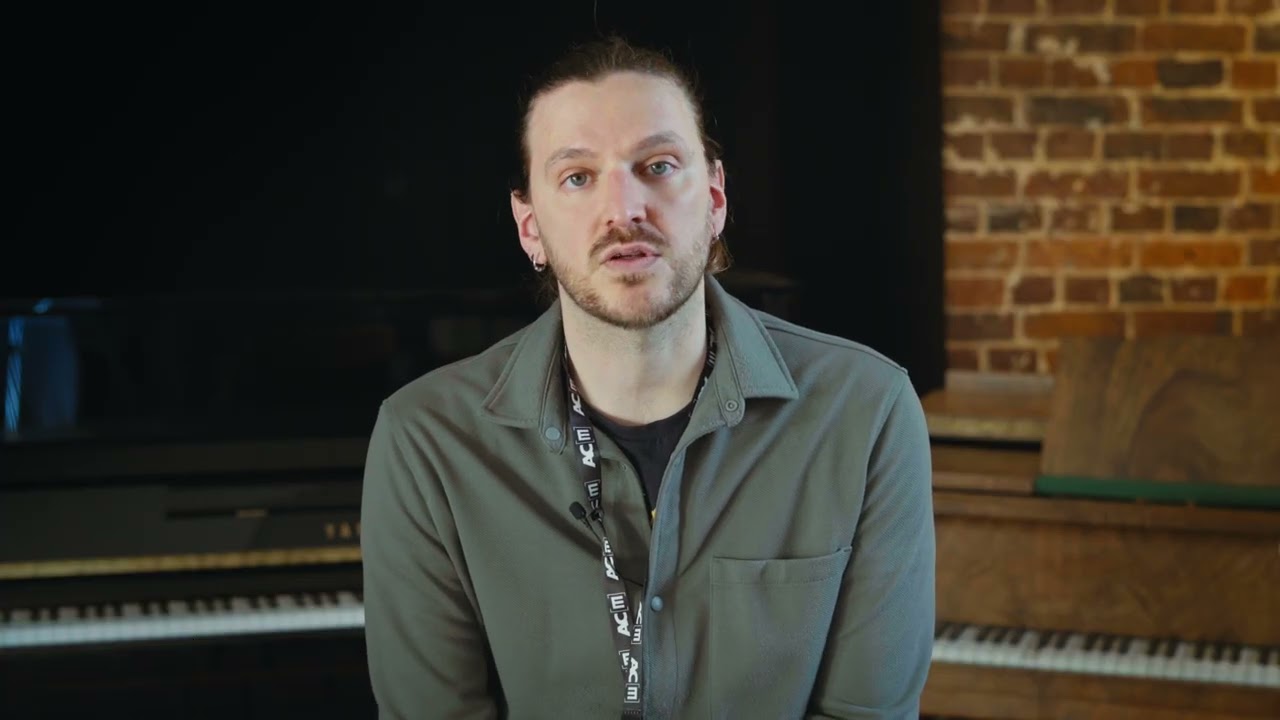
Senior Lecturer & Pathway Lead in Games

Bwinji Shamutete
Lecturer in Games

Slava Shishkin
Senior Lecturer in Games