










Policy 043: Critical Incident

Policy 043: Critical Incident

1. Purpose and Scope

1.1 This policy sets out ACM’s approach for handling an emergency situation that affects the ACM community that may occur in or out of teaching hours, weekends and during holidays.

1.2 A critical incident may involve both internal and external factors that may include hazards and events that pose direct or imminent threat to the safety, security and wellbeing of ACM students and staff.

1.3 This policy outlines the management plan for critical incidents as they may occur while students are undertaking their study during nominal teaching hours, and ensures that ACM is equipped to provide meaningful support to all students and staff affected by an incident.

1.4 The policy provides guidance to actions which should be considered by Executive Management, the Senior Management Team, and the Critical Incident Management Team (CIMT) in case of an emergency within ACM or the local community, or on an educational visit.

1.5 This policy gives clear guidance regarding the circumstances under which the policy would be enacted. The Designated Safeguarding Lead, on assessment of all factors, and individuals directly or indirectly involved, would exercise judgment over the policy’s activation and implementations.

2. Policy Statement

Critical Incidents

2.1 ACM  is committed to emergency planning to ensure the safety of its members and the smooth running of its business.

2.2 It is important to the success of emergency planning at the institution that its community is aware both of the central responsibilities and commitments in the case of a critical incident on campus, but also of local responsibilities and information outlets.

2.3 A critical incident is a sudden event or situation which may put staff and students under stress both physically and emotionally. In assessing a critical incident, consideration must be given to the existing factors and the impact on staff and students. It must also be considered with regard to the scope, and the wider public impact.

2.4 In general terms, a critical incident is defined as a traumatic event which causes or is likely to cause extreme physical and/or emotional distress to staff and/or students and may be regarded as outside the normal range of experience of the people affected. This may include, but is not limited to events involving ACM students and staff, where there has been:

  • Extremist acts of aggression
  • Serious injury or death
  • Physical or sexual assault
  • Violence or threats of violence
  • Hold up, attempted robbery
  • Sudden or unexpected death or suicide of a member of the ACM community
  • Natural disasters
  • Fire, explosion, bomb threats
  • High publicity violent crimes
  • Any incident that is charged with extreme emotion.
  • Any fatality, near fatality or incident likely to affect seriously a number of staff and/or students
  • Serious traffic accidents
  • Major theft or vandalism
  • A student reported as a missing person.

2.5 Every critical incident is unique and will need to be dealt with differently, according to the needs of the people affected.

Critical Incident Management Team (CIMT)

2.7 The CIMT is responsible for:

  • The initial and ongoing assessment of the scale, duration and impact of the critical incident;
  • Establishing ACM’s operational and business critical priorities in responding to the incident;
  • The allocation of staff and resources;
  • The management of, and support, of any ACM representatives who are responsible for the planning, management, and response taken by ACM;
  • Liaison with external agencies as needed.
  • Note: any suspected extremist based acts of terrorism, including threats physical spaces and the community, or cyber based threats must be reported to the ACM Police immediately. The Prevent Lead will contact the Police to discuss arrangements for the handling of these matters which may or may not involve the CIMT.

2.8 In the longer term, the CIMT will support the Senior Management Team to ensure adequate implementation of:

  • Institutional reputation management;
  • Long-term business recovery;
  • Financial control;
  • Corporate priorities;
  • Community engagement;
  • Decisions relating to long-term staffing needs, which may result from an emergency or sustained disruption to area’s of ACM’s business needs.

2.9 The CIMT with normally comprise of 3-5 members, including:

  • A member of Executive Management
  • Two Members of Senior Management Team

And may include:

  • ACM Designated Safeguarding Lead (DSL)
  • ACM PREVENT Duty Lead
  • A member of student support services
  • A member of the education team
  • A member of the marketing team
  • Student Representatives

2.10 Depending on the nature of the incident, the CIMT may be expanded to include Heads of department (or their nominees) with specific responsibilities within the impacted areas.

Activation of the Policy

2.10 Information about an incident may come from a staff member, student, parent, the emergency services or the local authority.

2.11 The staff member who receives the notification should be mindful to request and make a record of as much information provided as possible:

  • The name of the person who has reported the incident
  • The specific incident details
  • Who, if anyone, has also been informed (for example, any emergency services)
  • The exact location of the incident
  • Details of any casualties
  • What, if any, action has been taken so far
  • A name of a contact at the scene, and their contact details
  • What further assistance, if any, is needed

Staff and Student Welfare

2.12 ACM takes the responsibility towards staff and students seriously, with student and staff welfare considered a priority.

2.13 Where there is an occurrence of a critical incident, welfare and well being of all affected individuals should be considered, with individuals who have been particularly adversely affected identified for additional support, should they wish to engage with it.

2.14. The diversity of staff and students should be taken into account when considering additional support, including considering contact with leaders within local faith communities.

2.15 Support which is accessed and made available after an incident may be referred to as Post-Incident Care. This is aimed at helping individuals to understand their feelings following an emergency and to identify sources of future support. The overall aim of the support is to help people in a way that will reduce the possibility of developing long-term effects and difficulties as a result of a critical incident.

Communication

2.16 Effective communication is integral to the successful management of any critical incident. It should include effective information exchange within the response team, engagement with staff, students and others immediately affected by the incident, and liaison with the wider public via the media where necessary. Crisis messaging must be managed with the utmost care and sensitivity after the initial incident.

2.17 Communication surrounding any incident should  focus on mitigating the effects of the incident on those who are directly involved. Relevant information will be shared with those who are impacted by the incident. It is vital to ensure that all communication is conducted in a manner that protects the interests and privacy of those involved.

2.18 Post-incident communication will focus on encouraging an orderly return to normal operations in a manner that protects the interests and privacy of those who were involved. Its scope includes, but is not restricted to, providing reminders to the community on how individuals can access support, including Medical Services and Counselling Services, and how members of the community can become involved in any post incident analysis.

2.19 By necessity, communication will be influenced by the nature of the critical incident. A communications plan will be developed by the CIMT to ensure that a clear communication protocol that outlines the responsibilities for the development and implementation of both internal and external communications.

2.20 Following an incident, the Senior Management Team should ensure that all ACM staff are fully briefed on facts and are aware of what information can be disclosed to the wider community, including media representatives.

2.21 Staff should be made aware of confirmed facts relating to incidents, and what information is authorised to be released. They should also be made aware of the potential problems caused by the spread of misinformation through word of mouth, media and social media platforms.

2.22 Designated staff, approved by Executive Management in consultation with the CIMT will are given responsibility to speak to external stakeholders, organisations, and media in relation to the incident. In some cases this may also be informed by the Police and other Government agencies. This does not preclude ACM student’s or employee’s right to freedom of speech, but does ensure that official communication is consistent and equitable.

3. Responsible Parties

3.1 The policy lead is responsible for the cyclical monitoring and review of the policy in liaison with the Quality Assurance and Enhancement Manager. The Critical Incident Policy lead is:

  • ACM Designated Safeguarding Lead

3.2 The Senior Management Team are responsible for ensuring staff awareness and effective implementation of the Critical Incident Policy.

3.3 Implementation and compliance with the Policy, and corresponding Procedure will be overseen by the following staff:

  • Executive Management
  • Senior Management
  • Education Management
  • Designated Safeguarding Lead
  • PREVENT Duty Lead
  • Human Resources Department

4. Reference Points

4.1 Internal:

  • Emergency Closure Policy
  • Safeguarding Policy
  • Health and Safety Policy
  • Content Approval Policy
  • ACM Prevent Policy

4.2. External:

  • Civil Contingencies Act 2004
  • Counter-Terrorism and Security Act 2015
  • Revised Prevent Duty Guidance: for England and Wales
  • Health and Safety at Work Act 1974
  • Human Rights Act 1998
  • Corporate Manslaughter and Corporate Homicide Act 2007

5. Date of Approval and Next Review

Version:                        1.1

Approved on:               03 September 2024

Approved by:               Academic Board

Next Review:                August 2025
Download POL_043_Critical Incident Policy_170728

Policy 046: Risk Assessment

Policy 046: Risk Assessment

1. Purpose and Scope

 1.1 This Policy provides an outline of ACM’s approach to identifying, assessing and managing risks that may be present where an individual has a unique set of  circumstances that may require specific consideration in relation to their individual identified risks that may be impacted by, but not limited to, physical or mental disability or impairment. The policy identifies the proactive approach adopted to support individuals and mitigate identified risk factors for individuals working or studying within ACM.

1.2 This Policy is aligned with the regulations of ACM’s validating partners and other external stakeholders to whom ACM must make reference.

2. Policy Statement

Risk Assessment

2.1 Where a need is identified, the risk assessment should be proactive and consider the particular needs of the student or staff member to whom the assessment refers.

2.2 The process of assessing risk should be practical and include discussion and information from any members of ACM staff with relevant experience and expertise, as well as including advisory notices from any external agencies where relevant.

2.3 The student or staff member should be included in the consultation and assessment of risks with the nominated assessor, with their commentary or suggestions treated with due diligence and incorporated into assessment and subsequent planning.

2.4 When considering risks, the severity and likelihood of potential harm or hazard should also be considered, to ensure that appropriate precautions have been considered and applied.

2.5 The assessment will focus on, but not be limited to, all campus environments and learning and teaching spaces within ACM. The risks associated with other ACM venues, catering services, partnering accommodation services, local transportation and environmental factors should also be considered.

2.6 Risk assessments will reflect current working and learning practices and make explicit references to areas of enhancement and any reasonable adjustments identified as necessary.

2.7 A collaborative and positive health and safety culture exists within ACM, with students and staff taking proactive responsibility for their needs and wellbeing. Students and staff are well supported with their changing, and additional, needs and encouraged to contribute to open dialogue regarding appropriate and dynamic support.

Record of Assessment

2.8 Risk Assessments provide an effective method to ensure that appropriate consideration and controls have been taken into account and that ACM premises provide the basis for a safe learning and working environment. They further provide a framework for ensuring ongoing review and enhancement.

2.9 Risk Assessments are reflected in, and contribute towards, the associated prevention documentation. This documentation refers to Risk Management Plans, Risk Management Registers and, where necessary, Personal Emergency and Evacuation Plans (PEEPs).

2.10 Risk Assessment Forms make explicit reference to potential individual hazards, the stakeholders to which the Assessment refers, the controls which ACM currently has in place for managing risk, and responsible officers in the implementation and support of Assessments and Plans.

2.11 Risk Assessment documentation takes into account any proposed changes (for example, to building layouts), and therefore should be easily adaptive.

2.12 Consideration of the longer term effects of the individual’s health and well-being should be addressed, updated, and reflected into risk prevention, to ensure risk assessment plans have legitimacy and currency, as well as being fit for their primary purpose.

Risk Prevention

2.13 Risks which are categorised as ‘moderate’ or ‘severe’ will be managed via Risk Management Planning. The stakeholder to whom the assessment refers to will be central in the collaboration and agreement of such planning.

2.14 Planning for risk prevention should make explicit reference to long term risk management and short term risk management.

2.15 Risk Prevention should ensure that precautions are reasonable and are representative of good practice within ACM.

2.16 Where risks are identified, every reasonable effort should be made to ensure the risk no longer exists. However, where this is not practical, due diligence should be given to considering and ensuring risks are controlled to ensure harm is unlikely.

2.17 Information regarding identified risks must be communicated to all stakeholders who may be affected.

3. Responsible Parties

3.1 All ACM staff and students have a duty to comply with any controls which have been identified in completed risk assessment exercises.

3.2 The following staff have a direct responsibility to ensure implementation of the Policy:

  • Education Guidance Manager
  • Facilities Manager
  • Human Resources Manager

4. Reference Points

4.1 Internal:

  • Critical Incident Policy
  • Safeguarding Policy
  • Health and Safety Policy
  • Equality and Diversity Policy

4.2 External:

  • Management of Health and Safety at Work 1999

5. Date of Approval and Next Review

Version:                        1.2

Approved on:               01 September 2025

Approved by:               Academic Board

Next Review:                August  2026

Download POL_046_Risk Assessment_170728

Policy 023: External Speaker and Events

1. Purpose and Scope

1.1 The purpose of this policy is to set out the arrangements for assessing the risks around particular events and external speakers, and for managing those risks.

1.2 The Academy of Contemporary Music has welcomed many external speakers since commencing delivery of music industry programmes in 1995.   Such speakers have brought and continue to bring great diversity of experience, insight and opinion for the benefit of students, staff and visitors.

1.3 This Policy applies to all staff, students, and third parties of ACM and to all Academy-controlled activities undertaken in the UK, and has been developed with regard to the PREVENT Duty, Equality and Diversity policy, and institutional strategic objectives.

2.Policy Statement

Legal Context and ACM’s Approach

2.1 All students and staff have the right to participate without fear of intimidation, harassment and threatening or extremist behaviour. The key factor for the preservation of academic freedom is tolerance and a respect for diversity. Intolerance involves behaviour motivated by prejudice or hatred that intentionally demeans individuals and groups defined by their ethnicity, race, religion and/or belief, sexuality, gender, disability, age or lawful working practices and which give rise to an environment in which people will experience, or could reasonably, fear harassment, intimidation or violence. ACM has a duty of care to all of its students and staff.

2.2 ACM values the opportunities presented by external speakers for students and staff to experience diverse opinion and to enter into debate. This is seen as an essential part of both personal, professional, and academic development.

2.3 ACM values the tradition of academic freedom and holds that no subject or belief should be excluded from reasonable, constructive discussion and debate. ACM values freedom of opinion and speech but recognises that, in the interests of the whole learning community, this must exist within formal guidelines.

2.4 ACM recognises and supports moral and legal frameworks of the society and community within which it works.

2.5 ACM will not accept the use of language by external speakers that offends and is considered to be offensive or intolerant. Specifically, this means offensive, misogynistic, misanthropic, sexual or racist language irrespective of context. Direct attacks on any religions or beliefs are not condoned.

2.6 ACM will not tolerate any person who intentionally demeans individuals and groups defined by their ethnicity, race, religion and/or belief, sexuality, gender, disability, age or lawful working practices and which give rise to an environment in which people will experience, or could reasonably, fear harassment, intimidation or violence.

Booking an External Speaker

2.7 Anyone organising an event must follow the process detailed below.

2.8 The majority of external speaker requests will be straightforward and can be handled entirely at a local (departmental) level. In these cases, following the steps outlined in the “Local assessment of proposed external speaker(s)” below will suffice. However, some requests may be complex and may require referral for further consideration. The “referral process” will only apply in a minority of circumstances – to events or speakers deemed to be higher-risk.

2.9 All requests for an external speaker are to be submitted by the event organiser making the request using the appropriate form to the Industry Link team at least ten working days before the planned event.

2.10 A transcript of the intended talk must be provided, where requested, and a written undertaking to abide by the provisions of this policy and to uphold the ACM policy on Equality and Diversity. Requests that do not comply with this provision will be refused. If the risk is considered medium to high risk a transcript must be attached to the External Speaker Submission Form.

2.11 ACM reserve the right to require references for the proposed speaker and also to refuse permission for the speaker to visit ACM. A refusal is final.

2.12 An appropriate member of staff will be present at all talks to monitor any concerns.

2.13 Speakers must be informed that all such events may be recorded/filmed by ACM. These recordings are for future reference and marketing purposes associated to ACM and to prevent the abuse of trust.

Assessment of Proposed External Speaker(s)

2.14 Prior to the confirmation of any external speaker, the event organiser will be responsible for assessing the speaker against the following set of questions:

Question 1: Has the speaker previously been prevented from speaking at ACM or another college or University or previously known to express views that could place at risk public order and safety, or represent a breach of law and breach of the External Speaker Code of Conduct.

Question 2: Does the proposed title or theme of the event present a potential risk that views/opinions expressed by speakers may place at risk public order and safety, or represent a breach of law and breach of the External Speaker Code of Conduct.

Question 3: Is the proposed speaker/theme likely to attract attendance from individuals/groups that have previously been known to express views that may place at risk public order and safety, or represent a breach of law and breach of the External Speaker Code of Conduct.

If the answer to all three questions is NO:

The event organiser can confirm the external speaker and book them to speak at their event or activity. It is required that the external speaker is sent the External Speaker Code of Conduct and Declaration Form to sign before the event takes place.

If the answer to any of the questions is unclear:

The event organiser must seek guidance from their line manager and respective Campus Head of Education, whose responsibility will be to further review the speaker(s) against the questions above and information submitted via the ACM External Speaker Submission Form.

If the answer to any of the questions is YES:

It is the responsibility of the event organiser to refer the External Speaker Submission form to the Director of Creative Industry Development. Where there are Prevent Related concerns the submission form shall be also sent to the ACM Prevent Lead. The ACM Prevent Lead will seek advice from the Regional Prevent Coordinator before reaching any decision.

Process for Assessment and Referral

2.15 The event organiser should use the External Speaker Submission Form to detail the event and review potential risk.  In the case of referral the form should be submitted to the Director of Creative Industry Development and ACM Prevent Duty Lead with any other information as available.  Where appropriate ACM will seek the advice of external agencies as to whether a particular event should take place.

3. Management of External Speakers

3.1 Any external speaker or event to be hosted by or at an ACM campus must be aware of, and comply with the ACM External Speaker Code of Conduct. It is the responsibility of the person organising the event to ensure that the speaker receives the ACM External Speaker Code of Conduct and has their attention drawn to its contents, and the declaration form is signed and returned for central keeping by the Industry Link Team.

4. Responsible Parties

4.1 The policy lead is responsible for the cyclical monitoring and review of the policy in liaison with the Quality Assurance and Enhancement Manager. The External Speaker and Events Policy lead is the:

  • Director of Creative Industry Development

4.2 Implementation and compliance with the Policy, overseen by the following designated staff:

  • Prevent Duty Lead (currently Head of Quality and Student Experience)
  • Industry Link Team
  • Executive Council
  • Education Executive
  • Campus Heads of Education
  • Human Resource Department
  • Designated Safeguarding Lead

5. Reference Points

5.1 Internal:

  • The Prevent Policy
  • External Speaker Submission Form
  • External Speaker Code of Conduct and Declaration Form
  • Safeguarding Policy
  • Safeguarding Procedure
  • Critical Incident Policy
  • Equality and Diversity Policy
  • Health and Safety Policy
  • Staff Disciplinary Policy
  • Acceptable Use of IT and E-Safety Policy
  • Freedom of Speech Policy

5.2 External:

  • The Prevent Duty
  • The Charity Commission: Safeguarding children and young people
  • Higher Education and Research Act 2017
  • Safeguarding Vulnerable Groups 2006
  • Protection of Freedoms Act 2012
  • Working Together to Safeguard Children 2015
  • Keeping Children Safe in Education 2015

6. Date of Approval and Next Review

Version:                                     1.3

Approved on:                            01 Sep 2025

Approved by:                            Academic Board

Next Review:                            August 2026

Click to download this policy

The .pdf version of this policy linked above contains the External Speaker Submission form.

Policy 001: Quality Assurance and Enhancement

Policy 001: Quality Assurance and Enhancement

  1. Purpose and Scope

1.1 ACM is committed to the provision of Higher and Further Education programmes that meet relevant qualifications frameworks and standards as set out through the awarding institution’s regulations, and the associated sector quality assurance frameworks.

1.2 This policy sets out ACM’s approach to maintaining and enhancing academic quality and standards.

1.3 This policy should be read in conjunction with associated institutional regulations of Middlesex University (for validated HE provision), and University of the Arts and East Surrey College (for FE provision)


  1. Policy Statement

2.1 ACM assures academic quality and standards through the deliberate implementation of strategic monitoring and review, that is supported by robust operational and Academic Governance structures that effectively support learning, teaching and the student experience.

2.2 ACM is committed to Quality Assurance and Quality Improvement of its Further Education provision aligned with regulations of the awarding institution and the Further Education and Skills inspection handbook published by Ofsted. This includes:

  • embedded awareness of equality and diversity in learning activities
  • learning and teaching in English and Mathematics
  • learning with integrated use of information and learning technology
  • integrated observation and evaluation of learning and teaching
  • use of learner feedback to inform learning and teaching
  • providing opportunities for teaching staff to discuss and share views about their practice.

2.3 ACM is committed to the setting and maintaining of Academic Standards, Assuring and Enhancing Academic Quality, and Information about Higher Education Provision for its Higher Education in line with the OfS conditions of registration, the UK Quality Code, and the regulations set out by the awarding institution.  ACM makes use of appropriate qualifications, credit frameworks and subject benchmarks to ensure programmes meet threshold standards.

2.4 ACM programmes are subject to validation and/or accreditation approval and inspections (or site visits) by the awarding institution that ensures that threshold qualification standards, subject benchmarks and academic quality and standards for each award are met, and aligned with the awarding institution’s regulations.

2.5 ACM is subject to regular monitoring and review by its collaborative partners, and works in collaboration with those partners to ensure that programmes delivered meet the standards and expectations of the awarding institution.

2.6 ACM operates its own academic quality assurance and enhancement policy to ensure effective cyclical monitoring and review of its programmes, with an emphasis on continuous improvement and quality enhancement. ACM works collaboratively with students as partners in learning and teaching to effectively monitor, review and enhance learning opportunities and the student experience. An evidence based approach underpins quality assurance drawing on various types of data and information to inform decision making.

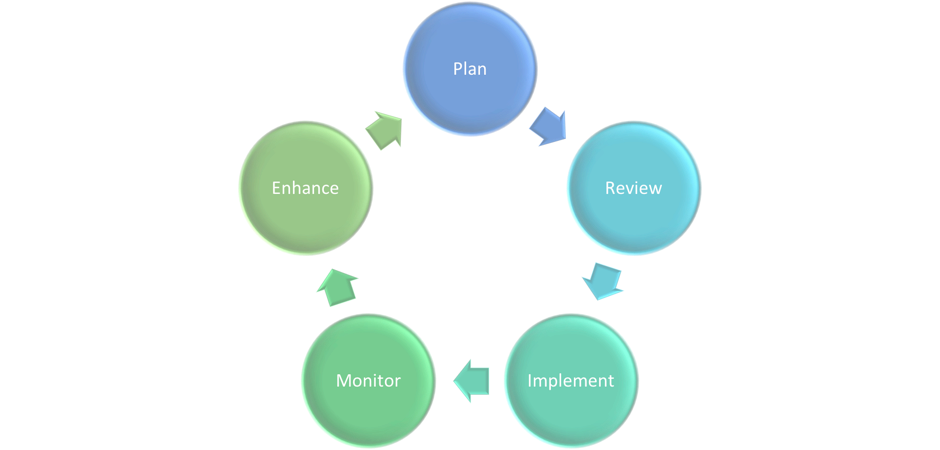
2.7 Quality Assurance Cycle (P-R-I-M-E)


Effective Use of Data

2.8 ACM makes use of various data and information sources gathered to inform cyclical monitoring and review. This includes:

  • Student profile data derived from statutory returns
  • Use of data in relation to:
    • student engagement and academic performance
    • achievement, progression, retention data
    • Award outcomes
    • Use of contextual data (demographics / analysis)
  • Student surveys, including Programme Evaluation Questionnaires (PEQ) and Module Evaluation Questionnaires (MEQ)
  • National Student Survey (NSS) data
  • Graduate Survey (DLHE) data

Student Representative System

2.9 ACM operates a Student Representative System that  captures  and focuses the wider student voice through a group of elected student representatives. The Student Representatives are elected through an open nomination process facilitated by the ACM Quality & Standards  department. Student Representatives report to the Student Voice and Representation Council and have membership of relevant ACM Boards and Committees.

See ACM Institutional Governance and Student Representative System Guidelines for further details.

Student Feedback Framework

2.10 ACM provides opportunities for students to provide feedback through formal and informal channels throughout their studies. Informal feedback may be given anonymously through surveys, suggestion boxes on campus, or the elected Student Representative. Informal feedback is also gathered through student meetings and interviews conducted throughout their studies.

2.11 The student voice is central to the monitoring review and enhancement process. ACM gathers formal student feedback through:

  • Academic Board and Committee structures
  • Quality & Enhancement Committee
  • Industry-related groups
  • Student Forum
  • Student surveys
  • Focus Groups

2.12 ACM gathers feedback from the wider student body through online survey collections that are normally administered towards the end of each study period. The data gathered through the surveys is distributed to the Boards and Committees for consideration, and the survey report responses and associated actions are communicated to the relevant student groups and made available through the student portal. All minutes and reports from the Boards and Committees are also made available to the student body through the student portal.

External Points of Reference

2.13 ACM makes deliberate use of external reference points as an integrated component of its academic quality assurance framework. This includes data and performance benchmarks from the UK HE and FE sectors, benchmarks from collaborative partners and industry.

2.14 ACM makes scrupulous use of External Examiners in line with the awarding institution’s regulations in the monitoring of academic standards in assessment practices and standards across all Higher Education programmes. ACM utilises feedback from external moderation processes to identify areas of good practice, and to provide direct responses and actions with regards to any recommendations received.

2.15 ACM liaises with External Moderators and moderation processes in the monitoring of assessment practices and standards across all approved Further Education programmes. ACM utilises feedback from external moderation processes to identify areas of good practice, and to follow up in regards to any recommendations received.

Programme Review and Approval

2.16 ACM follows the policies and procedures of the awarding institution(s) in the formal review and approval of new programmes. All arrangements for validated/accredited programmes will be set out in the Partnership Agreement and associated Memorandum of Cooperation.

2.17 A register of current approved programmes and the related agreements is maintained by the Quality and Registry departments.

2.18 Where a programme is subject to a fixed term of validation (normally 4 or 6 years), ACM will normally undertake an interim review of the programme at the midpoint of the review cycle. The amount of incremental change that may be made over the period of validation/accreditation will be subject to the awarding body’s regulations and the Partnership Agreement and associated Memorandum of Cooperation.

2.19 ACM will work with the awarding institution to ensure that fair and reasonable programme Teach Out arrangements are implemented for programmes that are no longer offered either due to the period of validation/accreditation coming to an end, the programme being superseded by a newer (re)validated programme, or for the programme no longer being offered for operational or strategic reasons. Under these circumstances ACM will work with all students that may be impacted by programme Teach Out to ensure fair and transparent arrangements are agreed.

Programme Monitoring

2.20 ACM undertakes regular review of its programmes to ensure:

  • that academic quality and standards are maintained
  • effective implementation of approved programmes (including the curriculum, assessment strategies, programme learning outcomes, module/unit components)
  • that the programmes are current, continue to be aligned with relevant bodies of knowledge and academic rigour, and achieve the intended learning outcomes

Identifying and Sharing Areas of Good Practice

2.21 ACM provides opportunities for staff and students to identify and share areas of good practice through reporting to the standing Boards and Committees. Areas of good practice will be reviewed annually and distilled into the Annual Monitoring Reports.

Reporting and Action Planning

2.22 ACM undertakes cyclical review of its educational provision through integrated programme and module/unit reviews. Reviews are informed by student achievement data, survey data, and feedback from formal and informal channels.

Programme Review

2.23 Programme Review is normally undertaken annually, aligned with the Annual Monitoring and Self Assessment reporting cycles that are completed in conjunction with the provisions of our awarding institutions .

2.24 ACM Boards and Committees are integrated into the annual monitoring processes, providing a mechanism for staff and student consultation and input on areas of good practice and potential improvement.

2.25 Programme Reviews are normally overseen by the Dean of Education in liaison with the relevant Programme Managers.

Module/unit Review

2.26 ACM undertakes cyclical review of all modules/units of study to ensure that all components of a programme are subject to regular monitoring and review. These reviews will be informed by direct student feedback, PEQ and MEQ survey feedback, academic progression and achievement data, and other student engagement information gleaned in consultation with students, tutors, Module Leaders and Programme Managers.

2.27 Module reviews will normally be be overseen by the Programme Managers in liaison with the relevant Module Leaders and tutors.

Action Planning

2.28 ACM uses action planning as an integrated mechanism for articulating and tracking quality improvement and enhancement activity. At the Institutional level ACM maintains a:

  • QAA Review Action Plan (for Higher Education provision)
  • Educational Monitoring & Enhancement Report (EMER, for Higher Education provision)
  • Quality Improvement Plan (QIP, for Further Education provision)
  • Self Assessment Report (SAR, for Further Education provision)

2.29 Actions plans are regularly reviewed through the standing boards and committees to ensure effective monitoring of progress and periodic review of actions.

2.30 Boards and committees use Action Plans to articulate and monitor quality assurance and enhancement activity across the organisation.

  1. Responsible Parties

3.31 The policy lead is responsible for the cyclical monitoring and review of the policy in liaison with the Quality Assurance and Enhancement Manager. The Quality Assurance and Enhancement Policy lead is:

  • Head of Academic Quality and Standards


3.2 Decisions and appropriate actions in support of the implementation of the Policy will be authorised by the following designated staff:

  • Head of Academic Quality and Standards
  • Quality Assurance and Enhancement Manager
  • Student Services Manager
  • Executive Dean of Education
  • Academic Registrar
  • Programme Managers
  • Senior Management Team members


  1. Reference Points
    • Internal:
  • Admissions Policy
  • Learning, Teaching, Assessment and Attainment Policy


  • External:
  • Middlesex University (MDX) Regulations
  • Middlesex University (MDX) Learning and Quality Enhancement Handbook (LQEH), Section 1: An Overview of quality assurance and enhancement activity at Middlesex-University.
  • The UK Quality Code for Higher Education
  • Office for Students (OFS) B Conditions
  • UAL Awarding Body qualifications resources (Link: http://www.arts.ac.uk/about-ual/awarding-body/resources/ )
  • Further Education and Skills Inspection Handbook (Ofsted)


  1. Date of Approval and Next Review

Version:                         1.4

Approved on:               01 Sep 2025

Approved by:               Academic Board

Next Review:                August 2026

Download policy – POL_001_Quality Assurance and Enhancement Policy

Policy 003: Complaints and Grievances Policy

If you have a disability which makes reading this document or navigating our website difficult and you would like to receive information in an alternative format, please contact: anddegree@acm.ac.uk 

  1. PURPOSE AND SCOPE

1.1 This policy describes how the Academy of Contemporary Music (ACM) supports students who are engaging with and making use of the Student Complaints and Grievances. If you are not sure who to speak to, seek advice from the Student Hub at your campus or via studentsupport@acm.ac.uk.

1.2 This policy explains, in an open, transparent and accessible way, how ACM deals with student complaints and grievances.

1.3 Complaints against ACM made by students are treated seriously and, if found to be justified, are acted upon to ensure that our students’ interests are protected.

1.4 ACM is committed to providing a high-quality experience for each student and encourages all students report any cause for concern in a timely manner.

  1. POLICY STATEMENT

Student grievances and complaints

2.1 The guiding principles are that complaints shall be:

  1. treated seriously and with fairness;
  2. dealt with promptly, sensitively and at the appropriate level of ACM;
  3. treated consistently across ACM;
  4. progressed through two stages – an informal stage and, if necessary, a formal stage;
  5. dealt with and resolved, wherever possible, informally and with the least amount of disruption as is possible.
  6. without prejudice to a student’s or group of students’ right to pursue remedies outside ACM and the awarding body, having exhausted ACM and/or the awarding body’s complaints procedures
  7. In order to be considered, any student complaint must be submitted no more than six calendar months after the event or problem relating to the complaint.

2.2 The procedures detailed below are designed to manage all forms of student complaints. ACM reserves the right to refer student cases to be investigated under the Appeals Policy and Procedure if deemed appropriate.

2.3 These complaints procedures and any decisions made under them are not intended to give rise to legal rights, or obligations on ACM or its awarding bodies to pay compensation either in respect of a decision made pursuant to the procedures or for a breach of these procedures. This policy is intended to facilitate ACM to resolve grievances.

2.4 Complaints can only be accepted and acted on when received from the student themselves or, where the student is under 18 or deemed to be unable to act in their own interest, from the Parent or Guardian previously declared to ACM.

2.5 Students are strongly encouraged to provide ACM feedback to allow ACM the opportunity to act on the feedback at the earliest opportunity before raising a complaint. If after receiving feedback they still wish to seek further advice they should refer to the stages below:

  1. Informal Complaint – Students should raise the complaint with the relevant team responsible to be invited to an in-depth discussion for early resolution. If unsure who to contact complaints@acm.ac.uk can assist students at this stage.
  2. Formal Complaint – Students can submit a complaint form for a formal investigation of the issue, where they are not happy will all previous early resolution responses. This is submitted to complaints@acm.ac.uk The complaints panel will meet to review all formal complaints raised.
  3. Validating body/ partner institution review – following the outcome of a formal appeal students may request a review by the validating body/ partner institution. Students can appeal the result at stage 3 of a formal complaint where they feel there was a material error in the way the complaint was processed. When the review has been concluded, the student will be issued with a Completion of Procedures (CoP) letter.
  4. (HE students only) Following this, any student who is dissatisfied with the final decision on their case may be able to apply to the Office of the Independent Adjudicator (OIA) for Higher Education. Information and eligibility rules are available at: oiahe.org.uk.

2.7 Students must submit complaints within the timescale stated within the complaints procedure. If there is a delay in submitting a complaint, the complainant may be asked to explain the reason for the delay, and the delay may be grounds for the complaint to be rejected. If significant time has passed, it may be difficult and/or impossible for a fair and proper investigation of the circumstances and detail of the complaint.

2.8 If the student or applicant is not satisfied with the decision at the conclusion of ACM’s Formal stage or if the recommendations made at this stage are not implemented, they may appeal in the first instance to ACM’s awarding body for their programme, which will follow its own process, as noted in 2.9 below.

2.9 For information on the complaints policy of their relevant awarding body, students should refer to:

  1. Degree students:
 Student Complaints and Grievance Procedures, Middlesex University Regulations
  2. Diploma Students: University of the Arts London’s Student Complaints Procedures
  3. Diploma Students, where a grievance relates to funding: East Surrey College Complaints Procedure

2.10 For applicants, decisions made by the awarding institution will be final, in line with their regulations.

2.11 For relatively minor queries or complaints, students and applicants are encouraged to raise them in the first instance to a relevant member of staff. The appropriate member of ACM staff may be able to resolve the issue without needing to make use of these Student Complaints and Grievances Policy, and corresponding Procedure.

Group Complaints

2.12  
ACM recognises that students may wish to lodge complaints collectively. In such instances students are asked to nominate one spokesperson with whom ACM staff will liaise to address the complaint. The spokesperson should endeavour to gather the views of all of the students who wish to lodge the complaint. If Stage 1 does not satisfactorily address the complaint, the spokesperson should complete a written explanation of the complaint (either a report or via the Student Complaints Form), which should be agreed by the entire group before submission. Students may opt to have their elected Student Representative act as spokesperson for the group.

Possible Outcomes from an Upheld Complaint

2.13 Where a complaint is upheld, ACM may instigate in any one or a combination of the following resolutions

  • A change in teaching content or teaching/support staff where applicable
  • A partial or full refund of fees paid
  • A opportunity for a student to repeat certain teaching without additional cost
  • A altered date the student ceased study on a course.
  1. POLICY OWNER

3.1 The policy lead is responsible for the cyclical monitoring and review of the policy in liaison with the Quality Assurance Team. The Student Complaints and Grievances Policy lead is:

3.2 Decisions and appropriate actions in support of the implementation of the Policy will be authorised by the following designated staff:

  • Quality Assurance and Enhancement Manager
  • Student Services Manager
  • Registry Manager
  • Senior Management, including Executive Senior Management
  1. SUPPORTING INFORMATION

4.1 Internal Documents

  • Academic Appeals
  • Academic Integrity
  • Admissions
  • Student Disciplinary
  • Equality and Diversity

4.2 External Documents

  • Middlesex University Regulations: Student complaints and grievance procedures
  • University of the Arts, London: Student Complaint Procedures
  • East Surrey College: Client Feedback Policy
  • QAA Quality Code, Chapter B9: Academic Appeals and Student Complaints
  1. DOCUMENT HISTORY AND NEXT REVIEW

Version:                      3.0

Approved on:             03 September 2024

Approved by:             Academic Board

Next review due:      August 2025

Download Policy 003_Complaints and Grievances_AY2324