





Undergraduate BA(hons) or BSc (Hons) Creative Industries Futures (Music) Live Production & Technical Arts
Apply now
Course overview
Live Production & Technical Arts Degree
The Live Production and Technical Arts pathway will give you a comprehensive understanding of the technical, creative and professional skills required to succeed in a fast-moving and exciting industry. The live events sector has become one of the largest, most dynamic and culturally influential areas of the entertainment industry, extending far beyond music concerts and festivals into broadcast, theatre, corporate events, esports, immersive experiences, touring productions and large-scale public events. The era of “the roadie” has long passed, replaced by a new generation of highly skilled technical and production professionals who design, manage and deliver complex live experiences for audiences around the world.
From live music and touring to television, streaming, conferences and corporate production, there has never been a greater demand for adaptable and highly trained live production specialists, and our graduates are increasingly sought after across a wide range of sectors.
As you progress through the course, through concert projects, live events and specialised skills units, you will develop expertise in areas such as Live Sound Engineering, Lighting Design, Broadcast and Streaming Production, Backline Technology, Stage Management and Production Management, alongside a broad understanding of the technical and operational roles that underpin professional production teams. Through the collaborative nature of the course, you will also develop the communication, leadership, problem-solving and teamwork skills required to thrive in professional live production environments.

What Makes This Course Stand Out
- Train in real live environments, working on gigs, showcases and events across ACM’s campuses – gaining the confidence and accuracy the industry expects.
- Develop professional technical skills across live sound, lighting, event production, stagecraft, backline and technical arts.
- Learn from experienced industry specialists who have worked on major tours, festivals, theatre productions and live broadcast events.
- Collaborate with performers, producers and creatives, becoming an essential part of their live setup and artistic process.
- Build a professional portfolio that showcases your technical expertise, problem-solving, and ability to run live shows from setup to pack-down.

Specialisms
We offer three distinct specialisms as part of the Live Production & Technical Arts pathway of our Creative Industries Futures course. We have created specific educational content designed to prepare you for a career in your chosen field while equipping you with an intimate understanding of the greater creative industries.
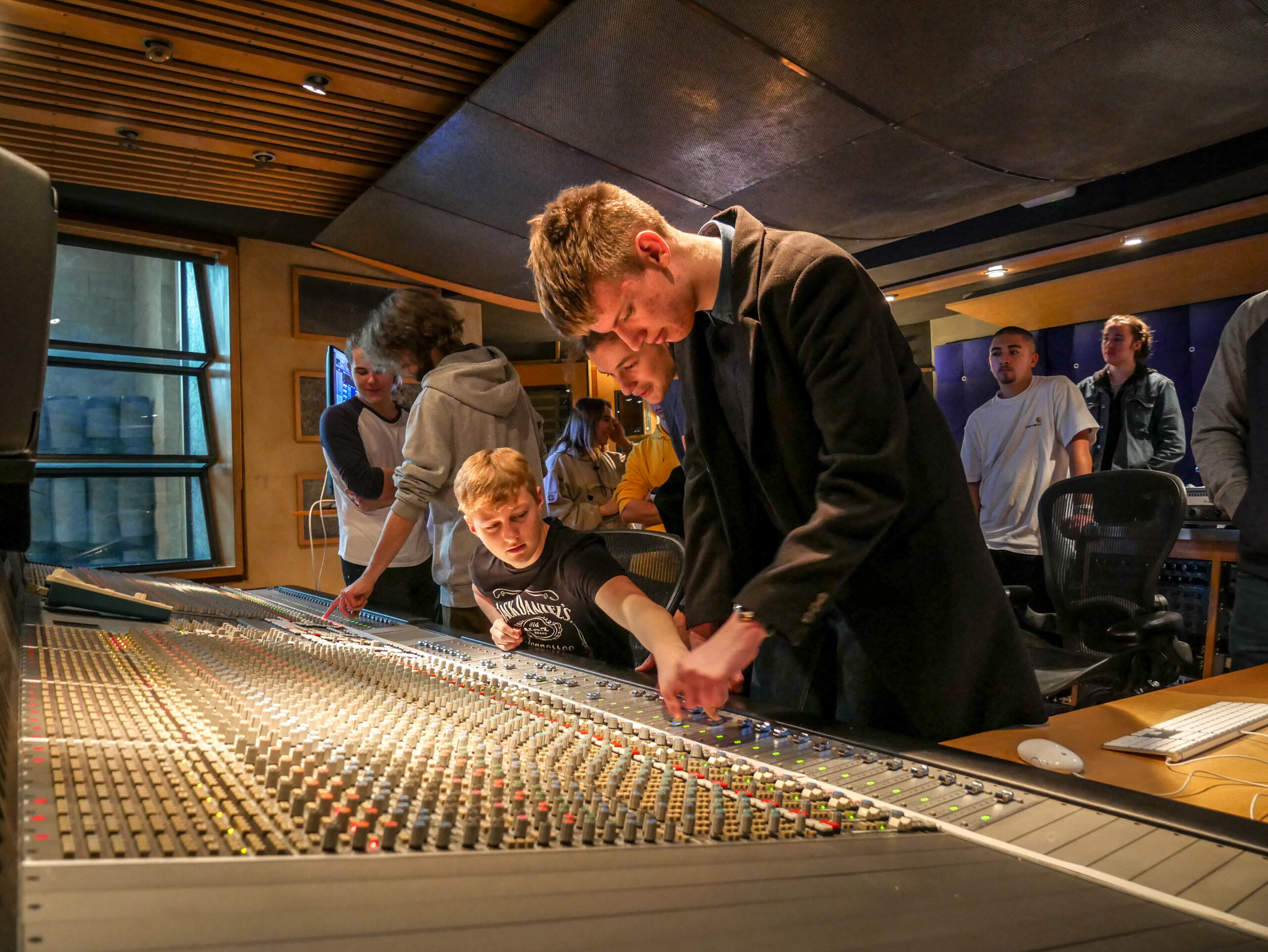
Live Sound
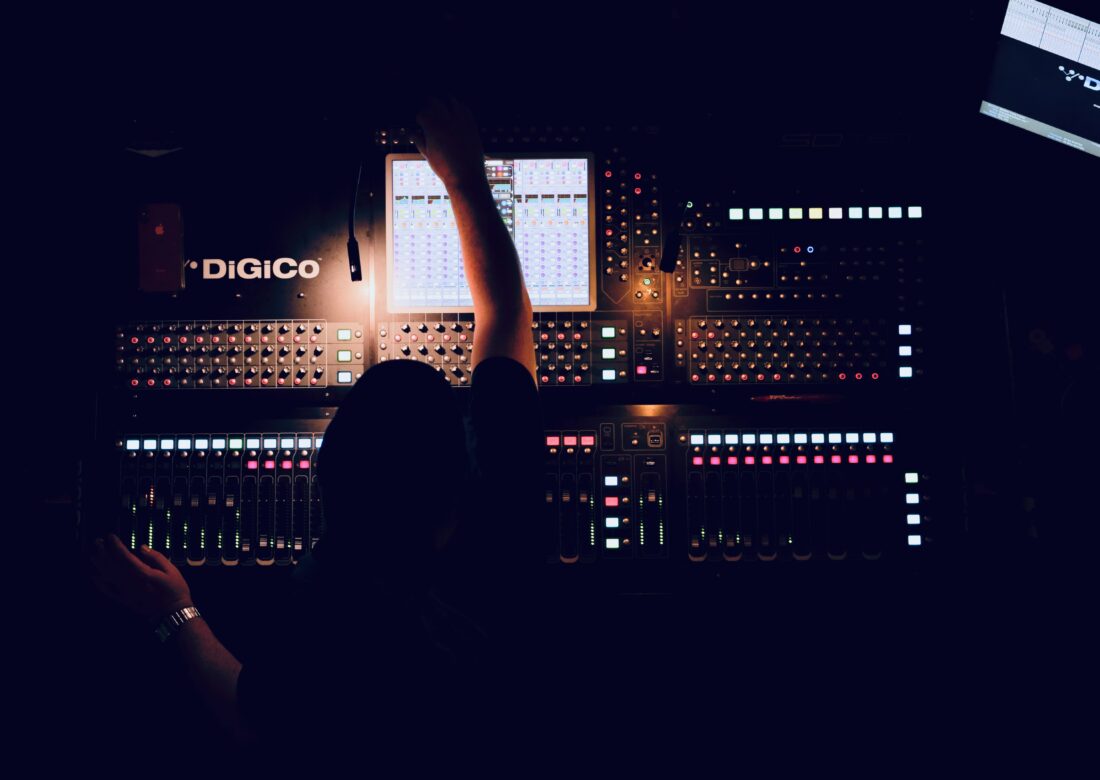
Learn how to become a leading sound engineer and achieve sonic excellence for live events, using a wide range of manufacturers’ technologies with tried and tested management and performance techniques.
Starting with the practical skills of live sound engineering, including patching, routing, mixing, soundcheck and communication skills, we will move through the basics of the modern concert sound reinforcement system and associated technologies, such as networked audio and basic rigging.
As we move to deepen our understanding, we will delve deeply into areas such as acoustics and the properties of sound in enclosed spaces, from musical acoustics, room modes, reverb times, and treatment and how to apply this to venues or studios. We take a deeper look at how the cutting-edge concert utilises creative technologies to enhance artistic performances. The course looks at Playback rigs, concert control software, show-calling tech, Radio systems, In Ear Monitoring, modern industry protocols and ways of working.
The sound at modern concerts requires many bespoke systems to be in place, such as power requirements, all of which are complex and important and require anyone working within live production to have a solid foundation in many creative technologies, their practice and safety. This will also include the transportation, setup and pack down of these major concert systems.
No live sound engineer is complete without further development of specialist skills, including advanced backline techniques, specific instrument tuning and maintenance. This exciting pathway specialism brings together a range of artistic, creative, technical and interdisciplinary skills to create more complex interconnected productions. Through the use of contemporary show technology, we explore the latest in multimedia immersive events, specialising in creating creative audio 3D and 4D experiences
These specialist skills units will run alongside the cross-pathway collaborative projects each term, giving the student a real-world learning experience. This will develop further knowledge and specialist skills in operating and specifying complex live sound systems. With this will come the management and creative skills needed to add a professional practitioner level of competence to the student’s practice.
Ultimately, this course is designed to create the modern live sound engineer and will cover important aspects of getting and keeping work through the meaningful practice of your craft, keeping up with technology and the ability to innovate and lead.
Live Music Production
Learn how to become a leading production manager and achieve great-looking and sounding concerts for both one-off events and tours.
Starting with the practical skills of live sound engineering, including patching, routing, mixing, soundcheck and communication skills, we will move through the basics of the modern concert sound reinforcement system and associated technologies, such as networked audio and basic rigging.
As we move to deepen our understanding, we will delve deeply into areas such as acoustics and the properties of sound in enclosed spaces, from musical acoustics, room modes, reverb times, and treatment and how to apply this to venues or studios. We take a deeper look at how the cutting-edge concert utilises creative technologies to enhance artistic performances. The course looks at Playback rigs, concert control software, show-calling tech, Radio systems, In Ear Monitoring, modern industry protocols and ways of working.
The sound at modern concerts requires many bespoke systems to be in place, such as power requirements, all of which are complex and important and require anyone working within live production to have a solid foundation in many creative technologies, their practice and safety. This will also include the transportation, setup and pack down of these major concert systems.
No live sound engineer is complete without further development of specialist skills, including advanced backline techniques, specific instrument tuning and maintenance. This exciting pathway specialism brings together a range of artistic, creative, technical and interdisciplinary skills to create more complex interconnected productions. Through the use of contemporary show technology, we explore the latest in multimedia immersive events, specialising in creating creative audio 3D and 4D experiences
These specialist skills units will run alongside the cross-pathway collaborative projects each term, giving the student a real-world learning experience. This will develop further knowledge and specialist skills in operating and specifying complex live sound systems. With this will come the management and creative skills needed to add a professional practitioner level of competence to the student’s practice.
Ultimately, this course is designed to create the modern live sound engineer and will cover important aspects of getting and keeping work through the meaningful practice of your craft, keeping up with technology and the ability to innovate and lead.
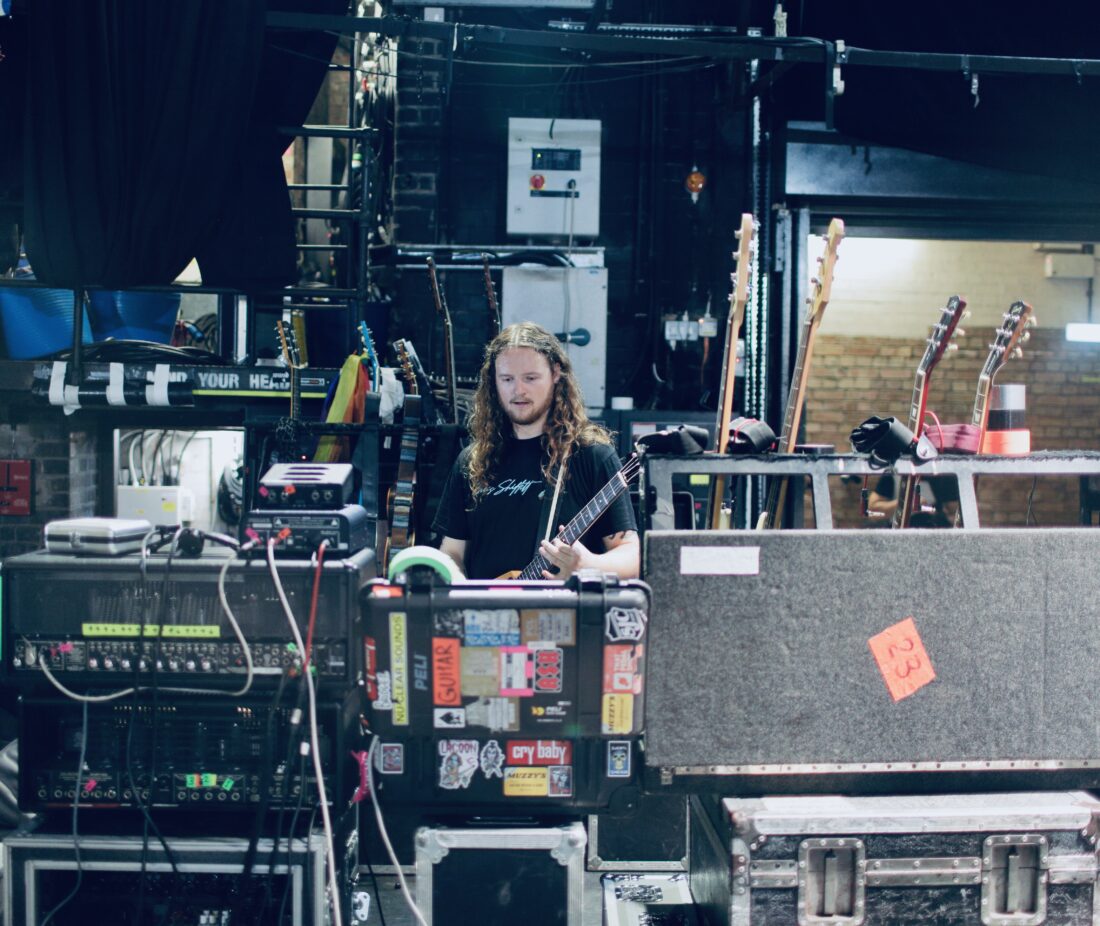
Backline Technician
Learn how to become a leading backline technician and achieve professional excellence at any live event, navigate the stress of a high-pressure environment and be show-ready, on time, every time.
Starting with the practical skills required on a modern concert stage, from coiling cables, spiking, striking, and patching to following stage plots and channel lists. This specialist route will provide the student with knowledge of current industry standard backline equipment, including its correct functioning and maintenance. We will examine techniques used in both the studio and live touring to achieve the best professional outcomes.
The course will then deepen knowledge in areas such as workshop and maintenance skills. Working with tools from basic screwdrivers to 3D printers and working in Maker-spaces and warehouse environments, we will explore equipment repair and maintenance. Going further with basic electronics, soldering, aesthetic repairs, specialist modification and even instrument design. We will build our knowledge by working with the vintage instruments and the latest computer technology regularly found on the concert stage. The contemporary live music concert uses many more technologies to enhance the performance, so this route will lift the lid on Midi, Playback rigs, SPD/MPC, hybrid drums, concert control software, show calling tech and much more
As we move to deepen our understanding further, we will delve deeper into the specialist skills required for working on today’s complex stage productions, including more advanced backline techniques, specific instrument tuning and maintenance. We will be developing creative skills to add a professional level of competence to the students’ practice, involving collaborations with musicians and artists.
The cutting-edge concert requires many complex and bespoke solutions to ever-increasing technical and artistic demands, such as staging systems and AV components. These systems require the backline technician to have a solid foundation in these creative technologies, including the handling of these systems safely and efficiently. We will also cover the logistical element of backline technologies, including hiring, buying, storing, flight cases and transportation of these valuable assets.
The modern concert personnel are usually freelance traders, and this route explains how to run your operation financially and in terms of personal development. We also look into the concept of creating networks, teams, agencies, contacts, and portfolio creation to strategies around career and personal development
Ultimately, this course is designed to create the modern live backline technician and will give you the skills needed to step into the industry as a well-rounded practitioner, innovator and asset to the industry.

Modules
Modules
ACM’s core validated learning provision. These are the building blocks of your degree, through which you will be assessed, accrue credits, and progress towards your final qualification. ACM’s module design blends the rigour of a high-quality academic framework and up-to-date industry knowledge. Students also develop critical professional competencies as they progress through their programme.
Advanced Music Production Skills Labs
Alongside your undergraduate studies, you’ll have access to advanced Skills Labs each term, giving you the opportunity to further develop your specialist technical expertise. These practical sessions allow you to explore emerging production techniques, refine your creative practice and encourage you to experiment with new technologies, ensuring your skills remain aligned with the latest developments in the music industry.
Modules
MIF – 407 Music Industry Futures
Studying alongside students from every music pathway, you’ll explore the people, organisations and processes that shape today’s music business, from recording and publishing to live events and emerging technologies. You’ll gain an understanding of how live production technicians collaborate with artists and industry professionals, whilst developing a broad awareness of the opportunities, challenges and career paths that define the modern music industry.
MIF-411 Specialist Creative Practice 1
Build the practical skills that form the foundation of your future career as a live production technician. This module is taught through hands-on Skills Labs where you will explore live music production from touring to stand-alone events. You’ll look at show concepts and design and how to deliver artistic briefs on a technical level. You’ll be introduced to sound, lighting, backline, streaming, immersive, AV and set, as well as developing the professional skills required to tackle live production projects.
MIF-412 Specialist Creative Practice 2
As you build on the foundations established in Specialist Creative Practice 1, you’ll refine your technical approach, strengthen your creative decision-making and explore stage management, from small venues all the way to arenas, alongside understanding the basics of modern concert sound reinforcement systems and associated technologies such as networked audio and basic rigging. Through your practical Skills Labs, you’ll develop more advanced technical techniques that support your ongoing growth as a live production engineer.
MIF-413 Music Culture & Communities
Music shapes cultures, communities and influences the world around us. In this module, you’ll study alongside other pathways across music and explore how the music industry connects with society, identity and creative communities. Through discussion, research and shared perspectives, you’ll gain a broader understanding of the cultural impact of music whilst developing valuable research skills that will inform your own practice as a live production engineer and help you create work that connects with your clients and audiences.
CIF – 405 Preparing for Collaborative Projects
During this module, you’ll develop the skills needed to prepare you for working with peers across the music degree to apply your live production skills to an interdisciplinary creative project.
CIF – 406 – Engaging in Collaborative Projects
Following on from CIF-405, you’ll work collaboratively on a shared project brief with students from other disciplines. You’ll build upon your skills to support larger projects with the creative industry and contribute your live production skills to fulfilling a creative brief.
Skills Units
SKU-LPT-01 Live Production
This module explores basic concepts in Live music production, from touring to stand-alone events, from conception to delivery. Looking at show concepts and design, and delivering artistic briefs on a technical level. All aspects of Live Production will be covered: Sound, Lights, Backline, Streaming, Immersive, AV and Set. How shows are brought together with equipment, control software and management.
SKU-LPT-02 Academic and Professional Skills in Live Production
This module allows students to develop the professional and academic skills required to flourish in Live Music Production, and to take this into their professional lives. It calls for effective research, networking and communication skills to be developed, setting the context for study on the program and professional engagements, gaining insights for opportunities and progression.
SKU-LPT-03 Stage Management
This module is an introduction to the skills required to work on the stage of any event, from small venues all the way to arenas. Whatever role you eventually take, the student should have a thorough grounding in what it takes to stage any event professionally, safely and grounded in common industry practice.
SKU-BUS-03 Management and Leadership
This Unit introduces students to methods and techniques for management and leadership and encourages them to consider the type of manager and/or leader that they want to be.
Modules
CIF – 501 – Specialist Collaborative Work
This module allows you to apply your live production skills within ambitious, cross-disciplinary creative projects. Working alongside students from across the music degree, you’ll respond to industry-inspired briefs, taking on the role of a sound or live production engineer to shape recordings and contribute your technical expertise to collaborative outcomes. Along the way, you’ll be strengthening your project management, communication and creative problem-solving skills.
CIF – 502 – Professional Collaborative Work
You’ll take your collaborative experience into a professional context by delivering a major project that reflects the realities of the music industry. Working with students across the course, you’ll apply your live production expertise to help realise ambitious creative work, managing technical and creative challenges and developing the confidence, adaptability and professional mindset needed to succeed as a producer in today’s collaborative creative industries.
CIF – 503 – Specialist Route Skills
Refine the skills needed to produce professional events through live sound engineering. You will understand how your mixes translate across to venues’ PA systems as well as develop your front-of-house engineer skills. You’ll also delve into acoustics and how to get the best out of the spaces you’re working in, live room recording and monitoring. Combining advanced technical practice with critical reflection, you’ll build the confidence, creativity and professional understanding required to deliver industry-ready shows.
CIF – 504 – Professional Route Skills
Building on your Specialist Route Skills, you’ll expand your production expertise by applying your skills to a range of professional live sound environments. Through advanced skills labs, you’ll further develop your knowledge of audio-visual equipment and its relation to networking, exploring AV setups, notable technologies and live streaming, as well as exploring the legal, financial and logistical side of tour management, whether you’re bringing international performers to the UK or vice versa. Through building a portfolio of professional work, you’ll demonstrate the technical ability, adaptability and critical thinking needed to succeed across the modern live production and events industry.
Skills Units
SKU-PRO-10 Live Sound Engineering
The Live Sound industry is directly linked to Music Production. This Skills Unit will enable students to understand how their mixes can translate across to venues’ PA systems. Giving the opportunities to learn new skills used by Live Sound Engineers within setup, monitors, and Front of House, and previous technical knowledge can be adapted from Studio Production to work in a live environment.
SKU-LPT-04 Audio System Engineering
Understanding the basics of the modern concert sound reinforcement system and associated technologies, such as networked audio and basic rigging.
SKU-PRO-08 Acoustics
Acoustics crosses over into many audio applications and industries. Getting the best out of your control room, monitoring, live room recording, and other acoustic spaces is one of the many ways that a deeper understanding of acoustics can help.
SKU-BUS-16 Tour Management
This Unit explores the legal, financial, and logistical side of bringing international performers to the UK, and/or working remotely with international talent.
SKU-LPT-08 Networked AV
In this unit, students will learn all about Audio-Visual equipment and its relation to Networking. This course digs deep into the technical aspects and nuances of music technology in relation to audio-visual equipment. Exploring AV setups, notable technologies, live streaming, and culminating it all into a final project where students can demonstrate their skills.
Modules
CIF-601 Critical Review Preparation
Prepare for your dissertation by developing the research, analysis and critical thinking skills needed to investigate contemporary issues in music production and recording engineering. You’ll explore current debates, technologies and professional practice whilst learning how to evaluate sources, develop research questions and construct evidence-based arguments. This module will provide the foundation for independent research, helping you identify a topic that reflects your interests and future career ambitions.
CIF-601 Critical Review
Undertake an independent research project exploring an area of live production that matters to you. Whether investigating emerging production technologies, creative practice, industry trends, studio workflows, or the wider social and cultural impact of music, you’ll critically evaluate contemporary issues using academic research and professional evidence. You’ll produce a substantial piece of work that demonstrates your ability to think critically, conduct independent research and contribute to conversations shaping the future of music production.
CIF – 603 – Leadership and CPD
Prepare for life beyond your studies by developing the advanced technical skills and professional mindset expected of today’s live production engineers. Through specialist Skills Labs, you’ll explore advanced live sound and the technical aspects and nuances of music technology within live events and how to get and maintain work, practice your craft and keep up with technology within contemporary live production. As you refine your technical expertise, you’ll reflect on your strengths and develop your leadership skills.
CIF – 602 – Leading a Professional Collaborative Project
Bring together everything you’ve learned throughout your degree in your final major collaborative project that showcases your skills as a live production engineer. Taking a leading role within an interdisciplinary team, you’ll manage the creative and technical demands of delivering a professional standard body of work. You’ll be supported by specialised Skills Labs in performance and technology, and in how cutting-edge technology is applied within live music performance to enhance music production and immersive audio. You’ll also explore cutting-edge production formats and the professional knowledge to support the launch of your career in the music industry.
CIF – 604 – Professional Portfolio
This module enables students to create a portfolio and digital presence that includes course output, work experience, freelance work or volunteering targeted to professional opportunities or further study. Through the delivery of their assessment, students are invited to position their work through the lens of industry, creating a portfolio of work and an accompanying plan for professional development and progression in their chosen field.
Skills Units
SKU-LPT-06 Advanced Live Sound
In this unit, students will learn all about live sound equipment. This course digs deep into the technical aspects and nuances of music technology for a live event. Students will be exploring notable technologies, live events, Industry standards, working with artists (talent), and developing their very own live sound proposals.
SKU-LPT-11 Contemporary Live Production
The modern Sound technician. How to get and maintain work. How to practise your craft, how to keep up with technology, and how to innovate.
SKU-PRO-13 Performance & Technology
Through case studies and hands-on demonstrations, this Skills Unit explores cutting-edge technologies, their application within live music performance, and technology’s ability to enhance the music production process.
SKU-PRO-20 Immersive Audio
Immersive sound and music have been a staple of digital media for decades, experienced mostly in modern cinemas. As the wider music industry begins to embrace immersive formats offered across all major music streaming platforms, this skills unit offers students the opportunity to learn about immersive recording and mixing. The course covers contemporary formats such as Dolby Atmos and Ambisonics and teaches the techniques and processes associated with building immersive listening experiences.
CIF – 701 – Professional Practice Frameworks
Develop the professional expertise expected of senior practitioners in the live production industry. You’ll critically evaluate your own creative practice, reflect on your professional experiences and benchmark your skills against recognised industry standards. This module helps you strengthen your credentials and prepare for leadership roles within the evolving music industry.
CIF – 702 – Applied research
Undertake an in-depth research project centred on an area of live production that aligns with your professional ambitions. Whether developing an advanced creative portfolio, investigating emerging production technologies or exploring innovative studio practice, you’ll combine rigorous academic research with specialist practice to produce a substantial body of work that reflects your expertise and individual interests.
CIF – 703 – Ideas into action
Transform ambitious ideas into professionally realised projects. From initial concept through to delivery, you’ll refine your practice whilst building the organisational and entrepreneurial skills required to deliver projects in professional environments.
CIF – 704 – Making connections
Success in the music industry is built on relationships as much as talent. This module helps you expand your professional network by connecting with industry practitioners, creative organisations, community partners and potential collaborators. You’ll develop the confidence to build meaningful professional relationships, identify new opportunities and position yourself within the wider music industry.
Advanced Music Production Skills Labs
Alongside your undergraduate studies, you’ll have access to advanced Skills Labs each term, giving you the opportunity to further develop your specialist technical expertise. These practical sessions allow you to explore emerging production techniques, refine your creative practice and encourage you to experiment with new technologies, ensuring your skills remain aligned with the latest developments in the music industry.
Clearing 2026 is open at ACM
If your results didn’t go to plan, you’ve exceeded expectations, changed your mind or you’re applying for the first time, there’s still time to secure your place for September. Learn from industry professionals, gain hands-on experience in professional facilities and build the skills, portfolio and connections to turn your passion into a career with ACM.
Our Admissions Team is here to guide you through every step of the process and help you find the right course for you.
Fees & Entry requirements
- Minimum age 17+ for Foundation Learners and 18+ for our Accelerated Degree Courses.
- You will be expected to hold A Levels or Equivalent Level 3 Qualification(s) worth 104 UCAS Points or more **
- You will be expected to hold a GCSE in English Language / Literature at C grade/ 4 (or higher)
- Suitability for the programme will also be assessed through an audition. View audition guides
- Fees & financing information can be found on our Fees page
- Term dates can be found on the Term Dates page
If you do not have A-Levels and require moderation, please speak to our admissions team to explore the options available to you.
This course is presented in conjunction with our partners Middlesex university and is subject to the regulations and policies detailed here.
Progression
Contact our Admissions team to discuss the possibility of switching to an Integrated Masters program or explore a range of our Postgraduate programs here.
Tutors
Matt Russell
Pathway Lead in Live Production

Andy Wardle
Senior Lecturer in Live Production