





Postgraduate MA / MSc Creative Industries Futures Creative Industries Futures
Apply now
Course overview
The Postgraduate Course in Creative Industries Futures is designed for emerging and established creatives who want to advance their practice, deepen their expertise and expand their professional possibilities. This flexible postgraduate programme allows you to shape your learning around your interests — whether you’re a producer, entrepreneur, performer, technologist, educator or creative leader.
With access to ACM’s industry-experienced tutors, specialist facilities and cross-discipline networks, you’ll develop advanced creative, technical and critical skills while working on meaningful projects that support your long-term ambitions.
What Makes This Course Stand Out
- Create your own professional pathway through a flexible, future-facing postgraduate programme.
- Learn from practitioners, researchers and industry experts active across music, games, media, business and education.
- Develop a major project or portfolio that accelerates your creative career.
- Study alongside a diverse community of postgraduate creatives, collaborating across multiple disciplines.
- Choose from 3 available specialisms to deepen your expertise in the areas of interest (see below).
KNOWING-WHY
Defining your Purpose and Positioning
You’ll be able to reflect on your personal strengths and professional goals to enhance your Purpose and Positioning within your chosen professional community. This is evidenced throughout the engagement of CPD activities that follow the requirements of a particular external framework that benchmarks your current knowledge and transferable skills e.g WWise for gamers, LCM diplomas for musicians, Leadership and Management, Creative Attributes by UAL, Business and Marketing, amongst others. You will not only refine your specialism, but expand your toolkit of transferable skills to help you to become a diverse and agile professional.
KNOWING-WHO
Developing Industry Viability and Creative Community
You’ll also have an incredible opportunity to collaborate and network with like-minded individuals to build your own creative community. Within core modules, you will learn the fundamentals of pitching and stakeholder management to ensure that your future projects reach and engage your targeted industry experts and ultimately, your audience/consumers. This will not only help you bring your creative projects to life, but you’ll be able to form long-lasting, valuable connections that support your career longevity and sustainability.
KNOWING-HOW
Exploring your Capstone Project
You’ll be able to put your innovative ideas into practice, learning key concepts from design thinking, innovation and entrepreneurship alongside the analysis and application of research to be able to develop your capstone project. You’ll be supported in tri-fold: with an individual Personal Tutor, an Academic Supervisor and a Career Mentor. Your final project can be achieved in a variety of formats, such as a new catalogue of work, a proof of concept, a minimum viable product or a provocation and disruption to ‘business as usual’ practice. This will demonstrate your leadership and specialist knowledge at the forefront of different working contexts and intersecting professional boundaries, ensuring you stay ahead in your field and make a lasting impact.

Specialisms
We offer three distinct specialisms as part of the Postgraduate course here at ACM. We have created specific educational content designed to prepare you for a career in your chosen field while equipping you with an intimate understanding of the greater creative industries.
Music Production
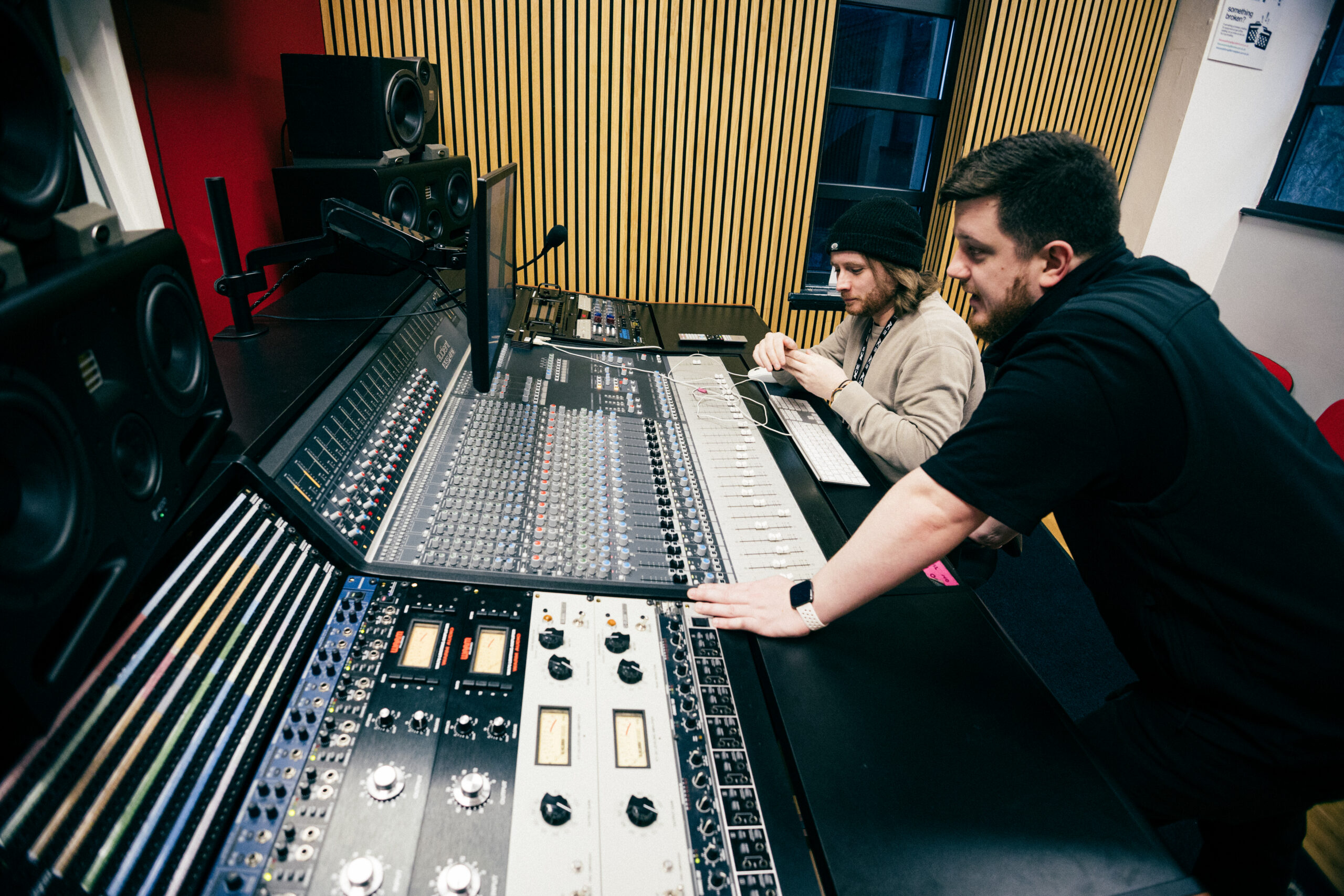
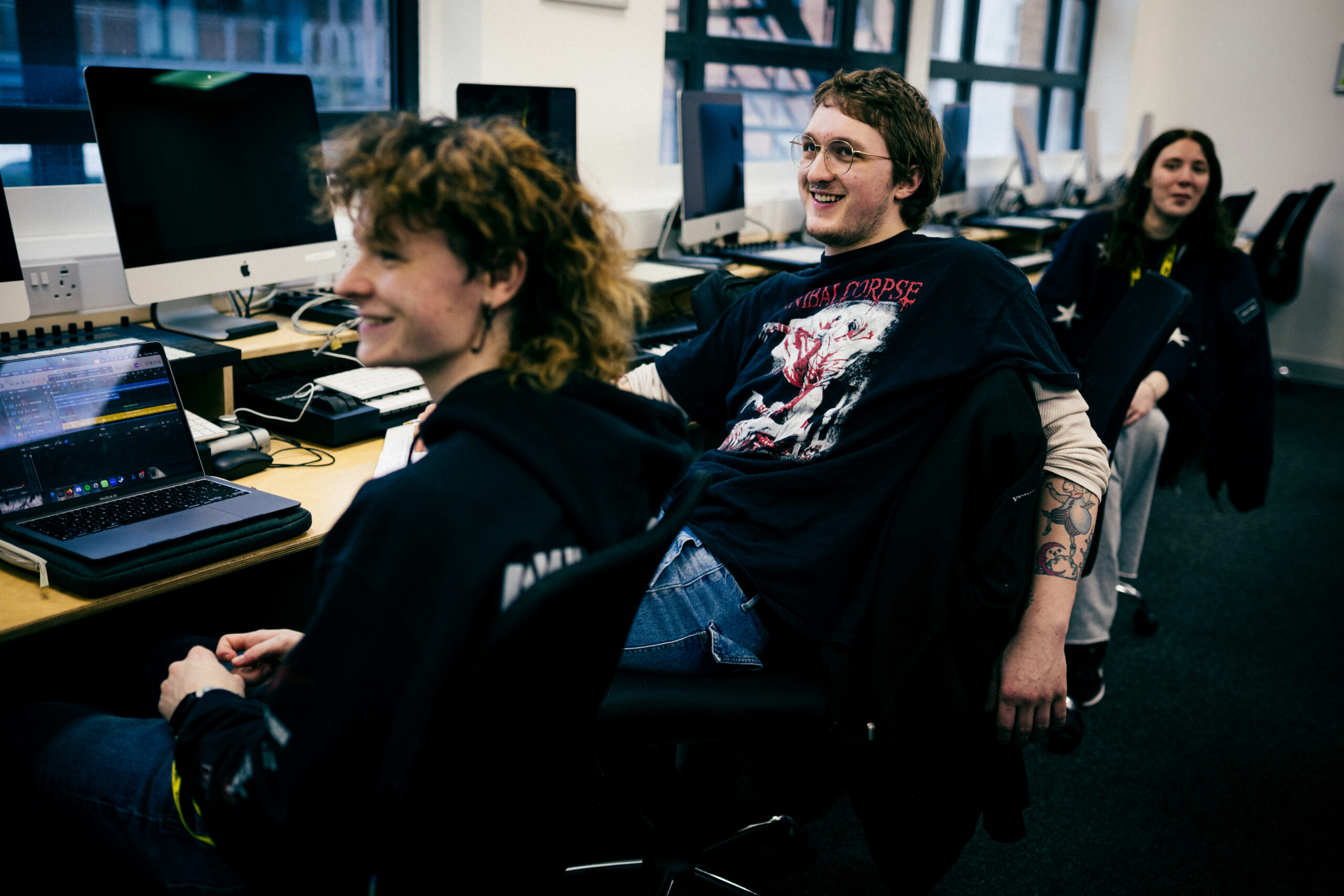
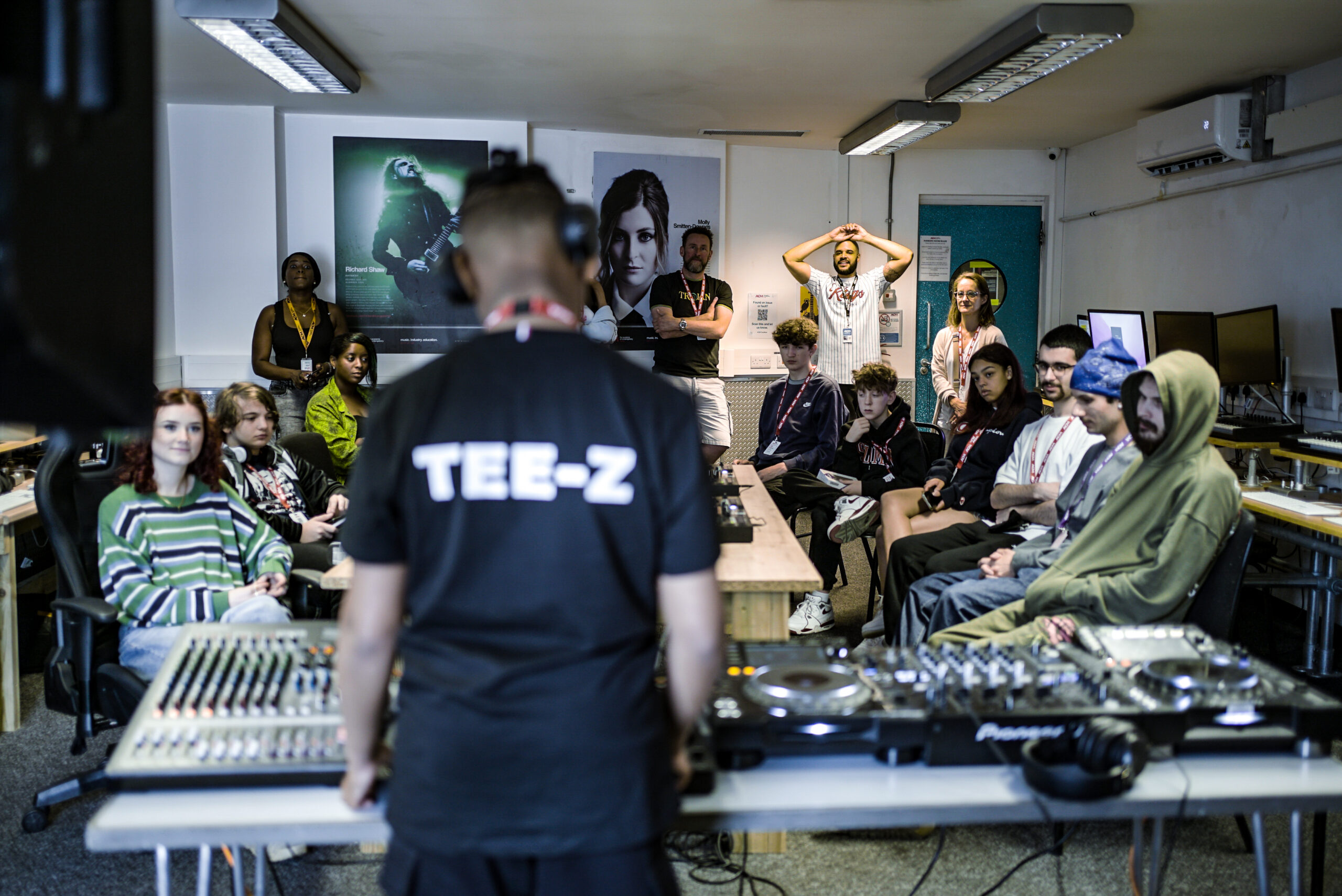
The Postgraduate Music Production course is an advanced programme designed for producers, engineers, and artists who want to refine their creative voice while working at a professional and strategic level. It is aimed at practitioners who already have a grounding in production and are ready to deepen their expertise, expand their sonic palette, and position themselves for senior or specialist roles within the music industry.
The programme focuses on contemporary music production practice, combining advanced creative output with critical listening, reflection, and industry awareness. Students are encouraged to push beyond genre conventions, explore new production approaches, and situate their work within wider musical, technological, and cultural contexts.
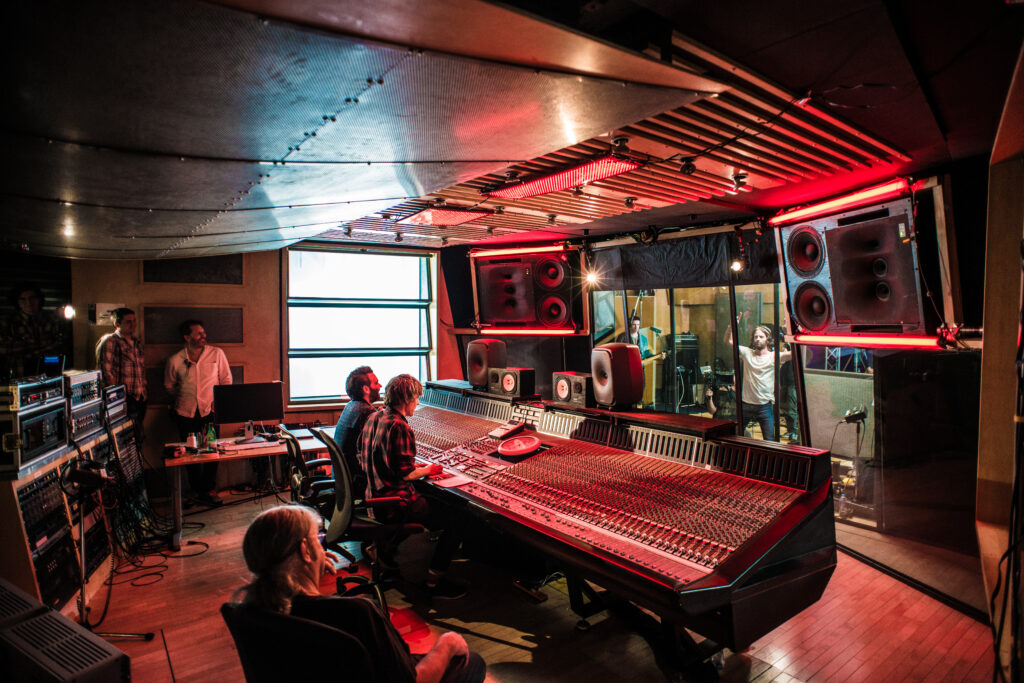
The Postgraduate Music Production course is powered by Metropolis Studios, one of the world’s leading music studios. This connection underpins the programme’s industry credibility and ensures that students engage with professional standards, workflows, and expectations. Teaching is informed by real-world studio practice, with opportunities to learn from experienced producers, engineers, and industry professionals.
The course is not about relearning technical fundamentals. Instead, it provides space for students to consolidate experience, refine decision-making, and develop confidence as creative leaders in the studio. Students work on ambitious production projects, developing a body of work that reflects both artistic identity and professional readiness.
Graduates leave the Postgraduate Music Production course with a strong, industry-facing portfolio, advanced music production capability, and the confidence to operate in senior creative roles. The programme also supports progression into specialist industry work, entrepreneurial practice, or further research and practice-based development.
Co-Production: Arts & Health
The Postgraduate Co-Production course is a distinctive postgraduate programme centred on collaborative making, performance, and co-production in real-world contexts. It is designed and delivered with artists from Rosetta Life, for artists and creative practitioners who want to work meaningfully with communities, explore socially engaged practice, and develop work that has cultural, social, and personal impact.
At the heart of the programme is co-production as a creative method: making high-quality, original work with people rather than for them. Students work collectively with artists, practitioners, and people living with long-term health conditions or within specific community settings to create original artistic work for public audiences. This may take the form of performance, music, movement, storytelling, or interdisciplinary creative practice.
The programme sits firmly within the Arts and Health and participatory arts sectors, and it explicitly distinguishes itself from music therapy or clinical therapeutic training. The focus is on creative practice, performance, and collaborative making in health, community, and public settings, equipping students with skills that are transferable across education, social care, public engagement, and cultural sectors.
A defining feature of the Postgraduate Co-Production course is its emphasis on intensive, real-world delivery with industry partner Rosetta Life and guest artists and policy makers from the sector. Students take part in an extended collaborative making period, working in rehearsal or performance spaces alongside community participants. This process culminates in a public performance or presentation in a professional venue or public space, supported by mentoring, teaching, and critical reflection before and after the practical phase.
The Postgraduate Co-Production course is closely connected to the rapidly growing UK creative health sector. The programme positions ACM to develop a long-term specialism in creative health, arts-based wellbeing, and creative technologies for care, responding to an expanding field that spans the arts, healthcare, social policy, and technology. Over time, this creates opportunities for research activity, knowledge-exchange projects, and innovative spin-outs at the intersection of arts, wellbeing, and digital practice.
Graduates leave the programme having delivered at least one live co-produced project, with documented public work they can present professionally. They gain access to participatory arts networks and are well placed to progress into arts and health practice, community engagement roles, education, public-sector cultural work, or further practice-as-research pathways.
Teaching Practice & Education
The Postgraduate Teaching Practice course is designed for educators working across music and the creative industries who want to develop their teaching practice, professional standing, and long-term career progression. The programme supports both employed educators and those building independent or portfolio-based teaching careers across private, peripatetic, further education, and higher education contexts.
The course combines pedagogical theory, reflective practice, and applied teaching experience. Students deepen their understanding of how people learn in creative contexts while remaining embedded in real teaching environments. The emphasis is on developing confident, reflective practitioners who can adapt their teaching to diverse learners, settings, and professional demands.
A defining feature of the Postgraduate Teaching Practice course is the integration of the RSL Awards teaching framework. This enables students to gain Qualified Teacher Status (QTS) alongside their master’s degree, significantly strengthening professional recognition and employability within education and training sectors.
The programme supports educators not only in improving their classroom or studio practice, but also in developing leadership capability, curriculum design skills, and sustainable professional pathways. This includes support for building successful private teaching practices, managing portfolio careers, and progressing into senior or leadership roles within education.
Graduates leave the Postgraduate Teaching Practice course with enhanced pedagogical confidence, a recognised teaching qualification, and clear progression routes into education leadership, advanced teaching roles, mentoring, or further academic development.

Modules
CIF-701 Professional Practice Frameworks
Term 1 – (60 credits)
This module enables you to undertake a Professional Practice Framework relevant to your personal and professional goals. Working individually and in small groups, you will also be accompanied by a Framework Mentor who will facilitate the evaluation of your skills in ONE of the following areas:
1. Creative Practice
2. Creative Enterprise
3. Higher Education Teaching
4. Workforce Development
5. Community Arts and Health
Each of the PPF holds its own platform, methods, facilitator role and requirements.
This provides you with the opportunity to review and strategically upskill your applied skills, including technical, craft and creative competencies as well as leadership, project management, interpersonal and other transferable skills.
CIF-703 Ideas Into Action
Term 2 – (30 credits)
This module encourages you to get involved in rapid prototyping, complex problem-solving and collaborative pitching based on strategies and feedback from invited guest speakers, who have already put their ideas into action.
You will be able to deconstruct the project management processes needed to develop from concept to release, whilst exploring your projects’ context from the perspective of different collaborators, to effectively pitch at a high level to a variety of audiences.
CIF-702 Creative Applied Research
Term 2 & 3 – (60 credits)
This module challenges and supports you to undertake an applied research project in the creative industries running across two terms: the first term focusing on the specific area of your research, and the second term concerned with the delivery and impact measurement.
The applied research might be a proof of concept, minimal viable product or an adaptation/ challenge to existing/ innovative practices, enabling you to evidence academic expertise and work collaboratively with local communities, industry and/or academic networks.
You will be allocated a supervisor based on your research specialism, who will provide an opportunity for feedback and support on work progress. You will also be able to discuss your pathway with your programme leader to choose between Arts-based or Science-based practice, which will decide whether you graduate with an MA or an MSc.
CIF-704 Making Connections and Building a Community
Term 3 – (30 credits)
This module enables you to establish a network of peers and relevant industry contacts to develop opportunities in key organisations in the local community, research organisations, potential investors, charities and the creative industries.
You will be provided with strategies, tools and methods within stakeholder management, achieving a comprehensive ability and understanding of how to communicate and engage with different stakeholder groups. This will be delivered in a portfolio of evidence tracking decision-making processes, activities and responses, ethical considerations, influence and impact.
This development of opportunities requires you to build your own community of interest from networks, including potential investors, partners, customers or new audiences, so that you can build a forward strategy for your applied research project in practice.
Fees & Entry requirements
- 2.2 or above at the Undergraduate Degree Level in a suitable field of study;
- Proof of English language proficiency in line with University requirements;
or
- Have worked in the creative industries as a professional for at least 3 years in the country in which you are a resident or any other country, and have evidence of the work that you carried out;
- Or a combination of formal qualifications and experiential learning, which, taken together, can be demonstrated to be equivalent to formal qualifications otherwise required.
Tutors
Catia Carvalho
MA/MSc Senior Lecturer

Justin Lyndley
Senior Lecturer & Pathway Lead in Production
Lee Gold
Senior Lecturer in Performance

Nic Britton
Senior Lecturer & Pathway Lead for Production
Dr Madeline Castrey
MA/MSc Senior Lecturer

Joel Harris
Lecturer in Production

Dr Tom Atherton
Senior Lecturer in Composition and Performance