





Undergraduate BA(hons) or BSc (Hons) Creative Industries Futures (Music) Composition
Apply now
Course overview
The Music Composition degree is designed for creators who want to explore musical ideas, develop a unique compositional voice and build a professional portfolio for today’s creative industries.
Whether you’re writing for artists, ensembles, film, TV, games or digital media, you’ll learn advanced compositional techniques, creative workflow and industry context — supported by expert guidance from active composers, arrangers and producers.
Refine your craft, collaborate widely and discover where your music can take you.
Modules
Modules
ACM’s core validated learning provision. These are the building blocks of your degree, through which you will be assessed, accrue credits, and progress towards your final qualification. ACM’s module design blends the rigour of a high-quality academic framework and up-to-date industry knowledge. Students also develop critical professional competencies as they progress through their programme.
Skills Units
Skills units are ACM’s unique delivery model for up-to-date technical and industry knowledge. These are where you will learn everything you need to excel in your chosen discipline, and inform how you approach your assessments.
CORE MODULES (Validated modules that give you credits)
Composition Techniques I
This unit prepares students with the fundamental techniques of composition needed to begin working as a composer. In particular, aspects of harmonic, rhythmic and melodic structures, timbral considerations, and voice leading are explored, giving the students a range of creative approaches to develop with.
Theory, Aural Skills & Critical Listening
This skills unit is an introduction to the core fundamentals of music theory, and how these tools can contribute towards commercial songwriting. Students will have the opportunity to gain knowledge and understanding of critical listening skills.
DAW Composition & Arrangement
This skills unit introduces students to the fundamentals of music production and its importance within the art of songwriting. Students will gain skills, knowledge and experience in composition & arrangement using digital audio workstations.
SKILLS UNITS (practical lessons to reinforce your knowledge)
Co-Writing, Collaboration & Constructive Feedback
Running alongside the core module “Engaging in Collaborative Work”, students can use this skills unit to explore the fundamentals of songwriting with others, and the importance of co-writing within the music industry. Students will also gain experience in giving and receiving constructive feedback.
CORE MODULES (Validated modules that give you credits)
Research Skills
This unit serves as the preparatory unit for the critical review project in level 6. Students will explore a range of topics and guided research, critically evaluating the academic work of others.
Composition Techniques II
This unit builds on the Composition Techniques I, giving them further creative approaches and techniques to develop their compositions
Notation and Score Preparation
This unit gives students the chance to develop, prepare and deliver scores of a professional standard.
Orchestration
This unit will act as a continuation of the Introduction to Orchestration module. Intermediate techniques will be covered, and we will discuss scoring for orchestral instruments in greater depth.
Arranging I
This unit will cover arranging techniques for a contemporary popular music ensemble. We will cover writing for the rhythm section, arranging background vocals, horn sections and more. We will discuss how to take a basic lead sheet and create an arrangement for a full band.
Advanced Harmony
This unit will cover advanced harmonic language from both the jazz and classical worlds. We will investigate how composers can use this language in their music effectively.
CORE MODULES (Validated modules that give you credits)
Research Skills
This unit serves as the preparatory unit for the critical review project in level 6. Students will explore a range of topics and guided research, critically evaluating the academic work of others.
Composition Techniques II
This unit builds on the Composition Techniques I, giving them further creative approaches and techniques to develop their compositions
Notation and Score Preparation
This unit gives students the chance to develop, prepare and deliver scores of a professional standard.
Orchestration
This unit will act as a continuation of the Introduction to Orchestration module. Intermediate techniques will be covered, and we will discuss scoring for orchestral instruments in greater depth.
Introduction to Film Music
This unit will provide a broad overview of the field of film music composition. Aspects of the business side as well as creative considerations will be discussed.
Advanced Harmony
This unit will cover advanced harmonic language from both the jazz and classical worlds. We will investigate how composers can use this language in their music effectively.
CORE MODULES (Validated modules that give you credits)
Research Skills
This unit serves as the preparatory unit for the critical review project in level 6. Students will explore a range of topics and guided research, critically evaluating the academic work of others.
Sound Design 2: Instrument Design
This Skills Unit gives students the opportunity to design and/or adapt their own instruments with a focus on Sound Design. Looking at virtual software instrument development platforms such as Reaktor and circuit bending within hardware.
Ensemble Recording
Recording an ensemble of instruments is a skill used across numerous genres. Working with the acoustic space and how this interacts with the musicians, this Skills Unit enables students to enhance their recording skills by working with instruments within ensembles such as String Quartets, Jazz bands and grouped or choir vocals.
Acoustics
Understand the properties of sound in enclosed spaces, from room modes, reverb times, treatment and how to apply this to a practical working environment, such as a venue or studio
Mixing and Mastering
This Unit gives the students everything they need to turn their recorded compositions into professionally finished work.
Sound Art
This module looks at how sound can be sculpted to create sound art suitable for galleries, sound installations and public art.
CORE MODULES (Validated modules that give you credits)
Freelance Musician
This unit aims to examine the career strategies and professional skills needed in order to develop a sustainable career as a freelance musician within a variety of industry contexts.
Composition Techniques III
This unit builds on the composition techniques II, providing students with advanced approaches to composing and developing identity.
Compositional Styles and Analysis
In this unit, students will explore a range of styles and break down the compositional techniques of a variety of composers.
Translating a Recording into a Live Arrangement
Ever wanted to learn how artists create exciting live arrangements? This unit will give you an insight into the process.
Arranging II
This unit will build upon knowledge and skills gained in Arranging I. More advanced arranging techniques for rhythm section, background vocals and horns will be discussed in depth.
Composing for Large Ensembles
This unit will cover composition considerations when working with a large ensemble such as a symphony orchestra or choir.
CORE MODULES (Validated modules that give you credits)
Advanced Composition for Media
This module will cover advanced techniques specific to composition for media. This module prepares the student for professional work in the field.
Composition Techniques III
This unit builds on the composition techniques II, providing students with advanced approaches to composing and developing identity.
Film Music Analysis
This unit will be comprised of multiple case studies. We will look closely at the full scores and sketches for these pieces and investigate the harmony, melody, orchestration and the dramatic implications against the films.
Synchronisation Techniques
This unit will cover the technical considerations of synchronisation when composing for linear audio-visual media. We will cover SMPTE time code, frame rates, time stamps, conducting considerations and audio-visual theory as it relates to music composition.
Composing for Large Ensembles
This unit will cover composition considerations when working with a large ensemble such as a symphony orchestra or choir.
SKILLS UNITS (practical lessons to reinforce your knowledge)
WWise 101 & 110
The Wwise-101 Certification covers all the essentials you need to learn to get started with Wwise. Becoming Wwise-101 Certified grants you the opportunity of getting listed on the Audiokinetic Creators Directory as a Content Provider, where you’ll be able to list your services, where developers and content providers source interactive audio talent. Wwise is the premier software for implementing audio into video games.
CORE MODULES (Validated modules that give you credits)
Sound Installations
This unit prepares the students for the development of sound installations and sound art. Students will learn about sound art, sound sculpture, structures of sound, the aesthetics of sound, and the relationship of sound and space more generally.
Sound Design 3: Max/MSP and Jitter
Max/MSP is an infinitely flexible, visual programming language for creating interactive music and visual applications. It is a powerful platform for exploring new ways to connect technologies and pushing the boundaries of musical interaction and engagement. This course will get you up and running with Max, give you the tools to begin creating your own applications and expose you to some of the incredible examples of how Max is utilised in the professional industry.
360-Mixing
This unit will give students the technical skills needed to take their compositions and be able to mix them for 360 sound environments. Being able to dynamically place sounds in a 360 spherical soundfield can immerse the listener in a spatial music experience.
Interactive Sound
This skills unit looks at how interactive systems can be used to enhance sound and music through audio for games and sound installations.
SKILLS UNITS (practical lessons to reinforce your knowledge)
WWise 101 & 110
The Wwise-101 Certification covers all the essentials you need to learn to get started with Wwise. Becoming Wwise-101 Certified grants you the opportunity of getting listed on the Audiokinetic Creators Directory as a Content Provider, where you’ll be able to list your services, where developers and content providers source interactive audio talent. Wwise is the premier software for implementing audio into video games.
CORE MODULES (Validated modules that give you credits)
Making Connections and Building a Community
This module enables students to identify, inform, and establish a network of peers and relevant industry and community contacts to develop opportunities and advocacy in key organisations in the local community, research organisations, charities and the creative industries, as well as connect with communities of investors. Students will engage core stakeholders in activities and communications to enable effective development of opportunities and increased advocacy using professional development tools such as action learning, critical reflective practice, clinical supervision, or other appropriate methods. Students will design, coordinate, and evaluate internal and external communications in a portfolio of evidence that tracks responses, activities, ethical considerations, influence, and impact.
Professional Practice Frameworks
This module enables students to demonstrate a comprehensive understanding of the professional sector-specific expertise required for a creative industries profession. Students apply these creative and technical skills in a wide range of interdisciplinary contexts. Students will create or synthesise tools, techniques, and procedures to produce work that solves complex problems and disrupts in order to meet interdisciplinary objectives.
Ideas Into Action
This unit will introduce students to methodologies for creating an idea and turning this into action. In this skills unit, you will explore methods for idea development and strategies for shortlisting and testing the viability of your idea. Once we have considered idea development, students will explore their idea from the perspectives of different collaborators and consider ways to engage stakeholders with their ideas.
SKILLS UNITS (practical lessons to reinforce your knowledge)
Applied Research (Focus and Impact on Creative Industries Futures)
This module enables students to evidence academic expertise in an applied research context. Students will engage and reflect on the developmental process and develop learning strategies for applied research. They will work on a project collaborating with local communities, industry or academic networks as appropriate. This module runs across two terms, the first term focuses on the specific focus of the applied research and the second with the delivery and impact measurement for the research. ARTS-RELATED SPECIALIST ROUTE Students will be able to use relevant academic research and sources to critically review and place their practice in a humanities, phenomenology or cultural framework. SCIENCE-RELATED SPECIALIST ROUTE Students will be able to use relevant academic research and sources to critically review and place their practice in a scientific methodological and technical framework.
Fees & Entry requirements
- Minimum age 17+ for Foundation Learners and 18+ for our Accelerated Degree Courses.
- You will be expected to hold A Levels or Equivalent Level 3 Qualification(s) worth 104 UCAS Points or more **
- You will be expected to hold a GCSE in English Language / Literature at C grade/ 4 (or higher)
- Suitability for the programme will also be assessed through an audition. View audition guides
- Fees & financing information can be found on our Fees page
- Term dates can be found on the Term Dates page
If you do not have A-Levels and require moderation, please speak to our admissions team to explore the options available to you.
This course is presented in conjunction with our partners Middlesex university and is subject to the regulations and policies detailed here.
Progression
Contact our Admissions team to discuss the possibility of switching to an Integrated Masters program or explore a range of our Postgraduate programs here.
Tutors
Arran McSporran
Lecturer in Performance
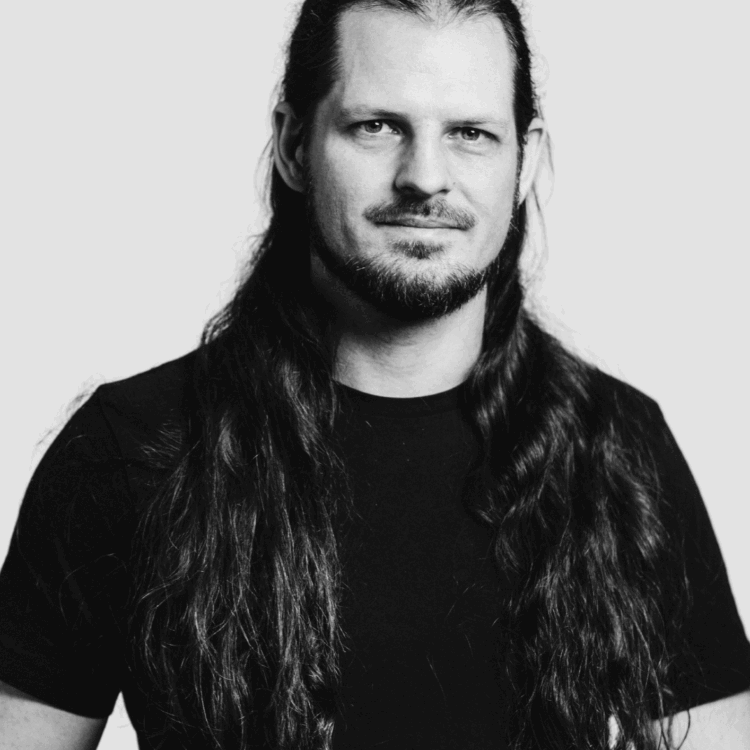
Matthew Peters
Composition Route Lead

Gwen Howard
Lecturer in Production

Matt Aston
Senior Lecturer in Performance